
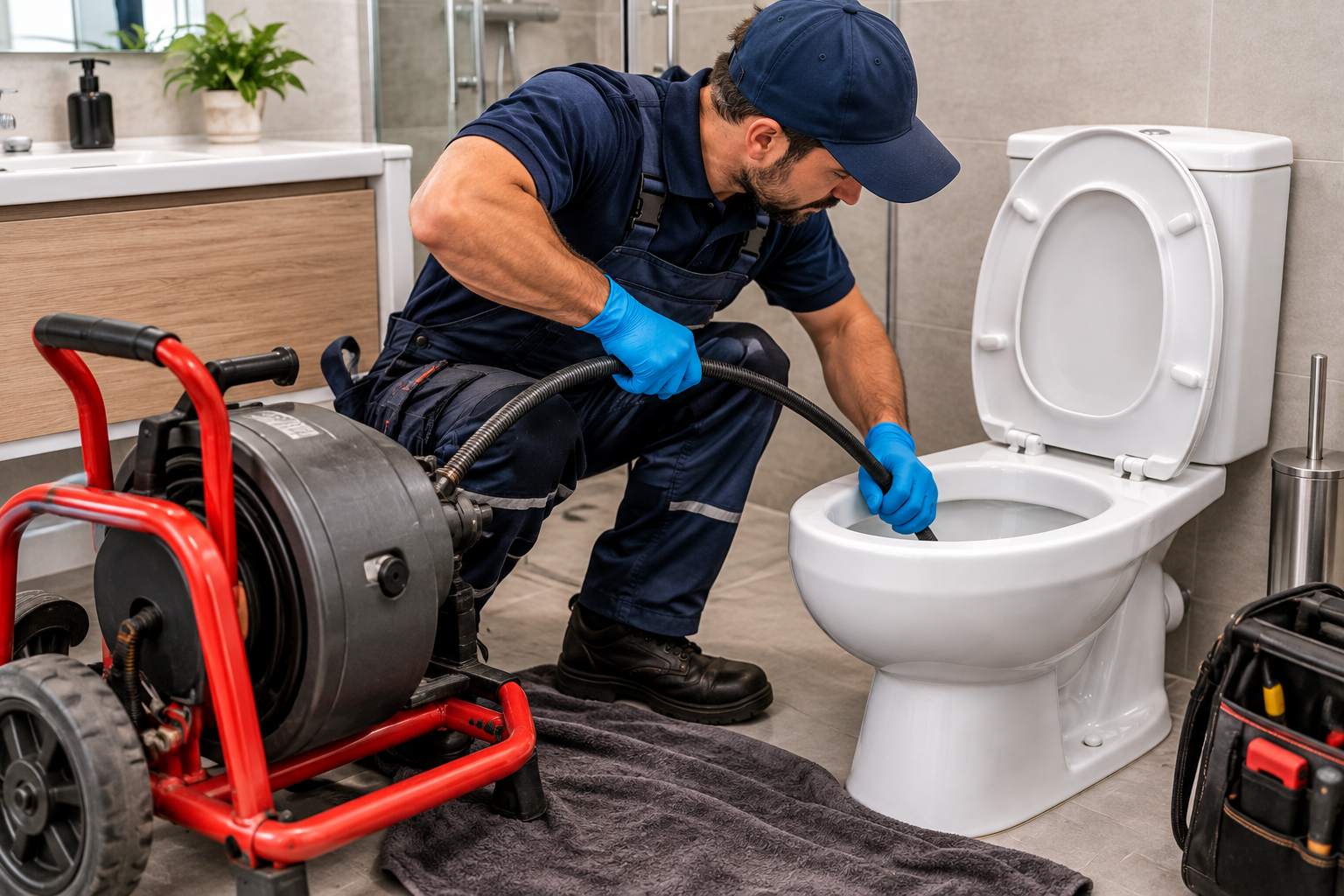
A blocked toilet can quickly turn from an inconvenience into a plumbing emergency, particularly when the water level starts rising or the toilet is the only one available in the property. In many cases, a minor blockage can be cleared with a toilet plunger, but repeated or severe blockages can indicate a problem deeper within the drainage system.
The most important first step is to stop repeatedly flushing the toilet. If water cannot move through the waste pipe normally, adding more water to the bowl can cause it to overflow onto the bathroom floor.
What you should do next depends on the cause and severity of the blockage. Too much toilet paper or a minor obstruction close to the toilet may respond to careful plunging, while foreign objects, damaged drainage pipes, roots or blockages further along the drain can require professional equipment and investigation.
This guide explains what to do when you have a blocked toilet, how to unblock a toilet safely, which DIY methods are worth trying and when the problem should be handled by a professional plumber.
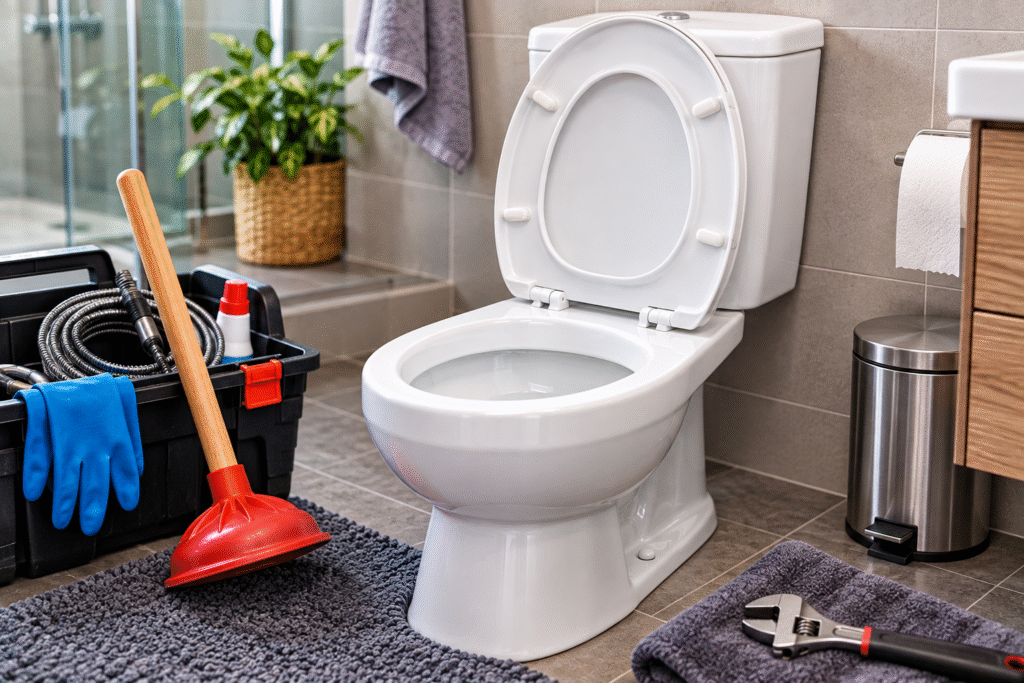
Blocked Toilet: What to Do First
If your toilet is blocked, avoid the temptation to keep flushing it to see whether the blockage clears. A toilet bowl already containing more water than normal may overflow when additional water enters from the cistern.
Instead, assess what is happening before taking further action.
- Stop flushing: Do not repeatedly add water to an already blocked toilet.
- Check the water level: If the bowl is unusually full, allow the level to drop before attempting to plunge it.
- Consider what caused the blockage: Think about whether excessive toilet paper or another object may have entered the toilet.
- Check other drains: Look at nearby basins, showers and other toilets for signs of slow drainage or backing up.
- Try a suitable plunger: A toilet or flange plunger can clear many minor blockages.
- Stop if the problem appears deeper: Multiple affected drains, recurring blockages or wastewater backing up elsewhere can indicate a larger drainage problem.
If the toilet is overflowing or wastewater is backing up into the property, professional assistance may be needed urgently. Savvy Plumbing provides plumbing services in Gauteng, including blocked-drain assistance and emergency plumbing.
Why Is My Toilet Blocked?
A toilet blockage occurs when wastewater cannot move normally through the toilet outlet and drainage pipe. The obstruction may be close to the toilet itself or further along the property’s drainage system.
Some blockages are caused by a single event, such as too much toilet paper being flushed at once. Others develop gradually as material accumulates inside the drainage system.
Common causes can include excessive toilet paper, wet wipes, sanitary products, foreign objects, accumulated waste, damaged drainage pipes and tree roots entering underground drainage systems.
The City of Johannesburg specifically advises residents to keep sanitary products, wipes, toys and other solid materials out of toilets and domestic drains. It also warns that fats and grease should not be poured into drainage systems because they can accumulate and restrict sewage flow.
Common Causes of a Blocked Toilet
| Possible Cause | Typical Signs | What May Be Required |
|---|---|---|
| Too much toilet paper | Sudden blockage after flushing | Careful plunging may clear a minor obstruction |
| Wet wipes | Slow flushing or recurring blockage | Physical removal or drain clearing may be required |
| Sanitary products | Sudden or severe blockage | The obstruction may need to be removed from the drainage system |
| Foreign object | Toilet suddenly stops draining normally | The object may need to be retrieved rather than pushed deeper |
| Accumulated material | Drainage becomes progressively slower | Drain cleaning may be required |
| Damaged drain pipe | Blockage repeatedly returns after clearing | Inspection and pipe repair may be necessary |
| Tree roots | Recurring drainage problems, particularly in underground pipes | Drain inspection, root removal and possibly pipe repair |
| Main drainage blockage | Several fixtures drain slowly or back up at the same time | Professional drain investigation and clearing |
How to Unblock a Toilet With a Plunger
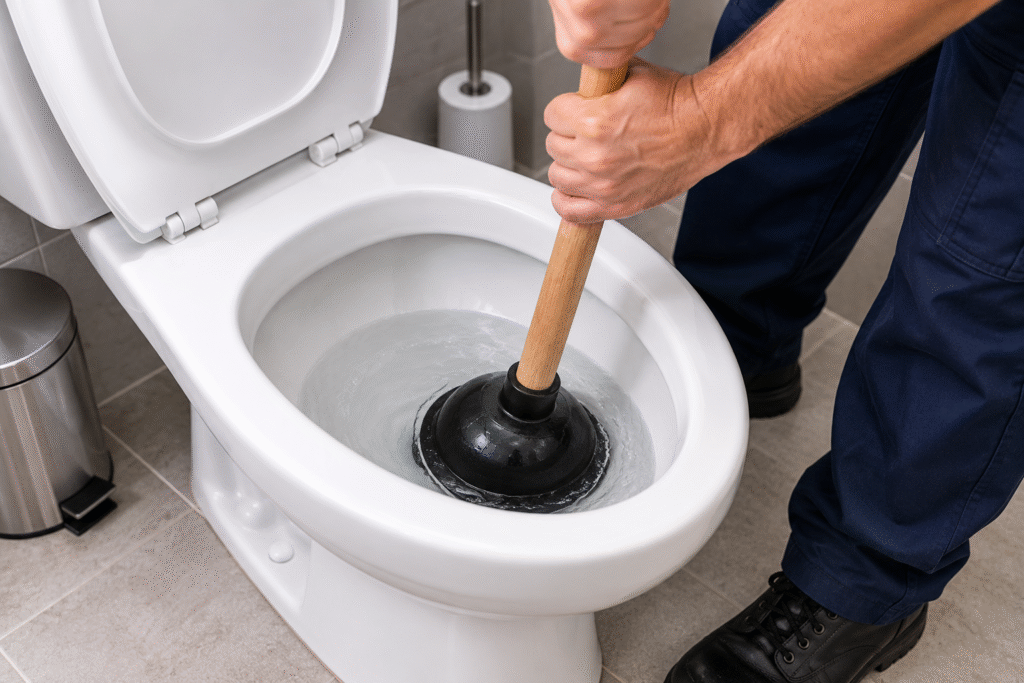
A plunger should generally be the first tool considered for a straightforward toilet blockage. It uses changes in pressure to help move an obstruction through the waste pipe without inserting sharp or potentially damaging objects into the toilet.
A flange plunger is particularly suitable for toilets because its extended rubber section can fit into the toilet outlet and create a stronger seal than a basic flat cup plunger.
To use a toilet plunger:
- Put on suitable gloves and make sure the floor around the toilet is protected from splashing.
- Make sure there is enough water in the bowl to cover the rubber section of the plunger.
- Position the plunger over the toilet outlet so that it forms the best possible seal.
- Begin with controlled pressure rather than an aggressive first push.
- Use several firm, controlled plunging movements while maintaining the seal.
- Remove the plunger and observe whether the water begins draining normally.
- Only test the flush carefully once there is a clear indication that the blockage has moved.
If reasonable plunging does not clear the blockage, repeatedly applying more force is not necessarily the solution. The obstruction may be too far into the drain, or the underlying problem may not be a simple toilet-paper blockage.
Savvy Plumbing’s guide to essential plumbing tools for homeowners explains the difference between common plungers, drain snakes and other useful plumbing tools.
How to Unblock a Badly Blocked Toilet
A badly blocked toilet requires more caution than a minor obstruction. If the bowl fills rapidly, plunging has no effect or the blockage immediately returns, the obstruction may be deeper in the waste pipe.
Before trying additional methods, determine whether the toilet is the only affected fixture. Run a small amount of water in a nearby basin or shower and check whether it drains normally. If other fixtures are also slow, gurgling or backing up, the problem may involve a shared drainage line rather than the toilet alone.
A basic hand-operated drain auger or suitable toilet auger can sometimes reach an obstruction beyond the toilet outlet. However, it should be used carefully and should never be forced through the pipe.
If an object such as a toy, toiletry item or other solid object has entered the toilet, pushing it deeper into the drainage system can make the problem more difficult to resolve. Retrieval may be preferable to forcing the obstruction further along the pipe.
Can You Unblock a Toilet Without a Plunger?
If a plunger is unavailable, some minor blockages may eventually soften and move, particularly when the problem is limited to toilet paper. However, there is no guarantee that adding household substances to the bowl will resolve the underlying obstruction.
A visible object that can be safely and hygienically removed without pushing it further into the toilet may be retrieved using appropriate gloves. Do not reach blindly into the toilet outlet or use sharp objects that could damage the toilet or cause injury.
If the water level is high, avoid pouring additional buckets of water into the toilet. Doing so can turn a blockage into an overflow.
When the obstruction cannot be cleared with straightforward measures, the safer next step is usually to identify where the blockage is located rather than continuing to experiment with increasingly aggressive DIY methods.
Should You Pour Boiling Water Down a Blocked Toilet?
Boiling water is not a good choice for a blocked toilet. Toilet bowls are manufactured from ceramic materials that can be affected by sudden temperature changes, and adding a large volume of water can also increase the risk of an already-full bowl overflowing.
If the toilet is blocked, focus on physically clearing an appropriate minor obstruction with a plunger or arranging professional drain clearing when the problem cannot be safely resolved.
Should You Use Chemical Drain Cleaner in a Blocked Toilet?
Chemical drain cleaners should not be treated as a universal solution for blocked toilets. The product may not address solid objects, wipes, sanitary products, damaged pipes or roots, and chemical remaining in standing toilet water can create an additional hazard when somebody subsequently needs to plunge or work on the drain.
Different drainage products also have different instructions and restrictions. Never mix drain-cleaning chemicals with each other or with household cleaning products.
For a physical obstruction in a toilet, correctly used mechanical methods are generally more useful because they address the blockage itself rather than simply adding another substance to the bowl.
What Should Never Be Flushed Down a Toilet?
Preventing unsuitable material from entering the drainage system is one of the simplest ways to reduce toilet blockages.
The City of Johannesburg advises residents to keep wipes, sanitary products, toys and other solid materials out of toilets and domestic drains. Previous Johannesburg Water guidance has similarly warned residents against flushing foreign objects such as wet wipes, nappies, cotton products and other waste into sewer systems.
Items that should be kept out of the toilet include:
- Wet wipes and baby wipes
- Sanitary pads and tampons
- Nappies
- Cotton wool and cotton products
- Dental floss
- Paper towels and other heavy paper products
- Food waste and cooking grease
- Toys and other solid objects
A toilet and sewer system should not be used as a general waste-disposal system. Keeping unsuitable materials out of the drain can prevent avoidable blockages further along the pipework.
Why Does My Toilet Keep Blocking?
A toilet that blocks once after an unusually large amount of toilet paper has been flushed may simply have experienced an isolated obstruction. A toilet that blocks repeatedly is different.
Recurring blockages suggest that the underlying problem may not have been fully removed. Material could still be restricting the pipe, an object may be lodged in the drainage system or the pipe itself may be damaged.
Underground drains can also be affected by root intrusion, pipe displacement, deterioration and accumulated debris. Clearing enough of the obstruction for water to flow again may provide temporary relief without correcting the actual cause.
Savvy Plumbing’s plumbing work guide explains why repeatedly blocked drains can require investigation for damaged pipework or deeper obstructions rather than simply being cleared over and over.
How Do You Know if the Main Drain Is Blocked?
A blocked toilet does not always mean the obstruction is immediately below the toilet. Wastewater from several fixtures can eventually enter shared drainage lines, so a blockage further downstream can affect more than one part of the property.
Possible warning signs of a larger drainage blockage include several fixtures draining slowly at the same time, toilets gurgling when other fixtures are used, wastewater appearing through another drain or more than one toilet becoming difficult to flush.
If sewage is backing up through showers, floor drains or other fixtures, stop unnecessary water use until the drainage problem has been assessed. Continuing to send water into an obstructed drainage system can increase the amount of wastewater backing up into the property.
How Professional Plumbers Clear a Blocked Toilet
The correct method depends on where the blockage is located and what has caused it. A plumber may first establish whether the problem is limited to the toilet or whether other fixtures indicate a larger drainage obstruction.
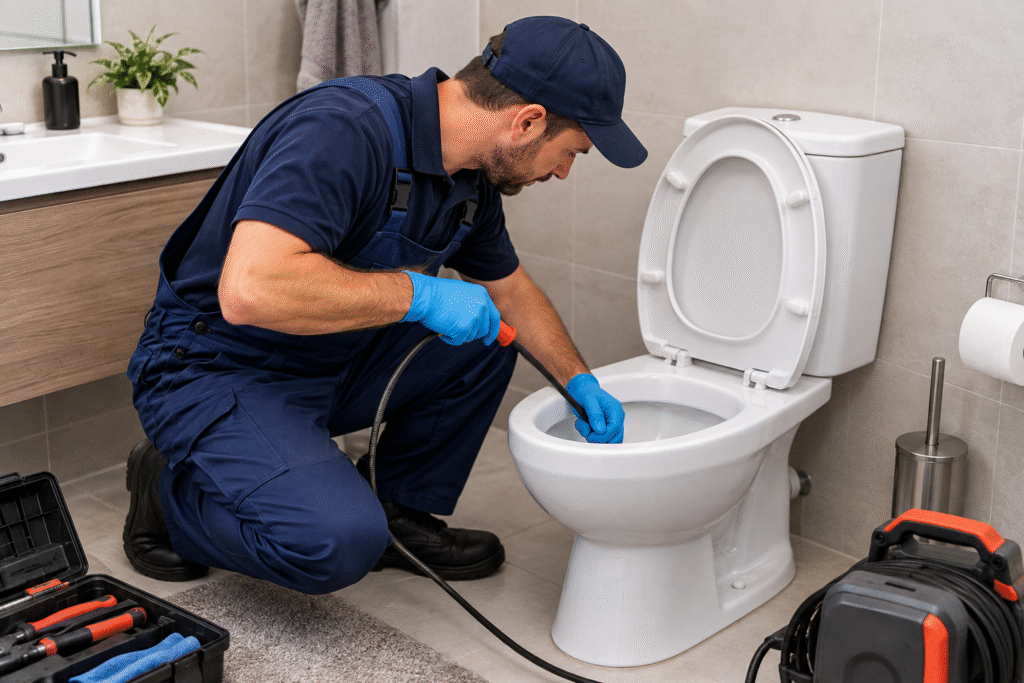
Professional drain-clearing methods can include mechanical drain equipment, high-pressure drain cleaning and, where appropriate, camera inspection of the drainage system. A camera inspection can be particularly useful when a blockage repeatedly returns and there is reason to suspect damaged pipework, roots or another persistent obstruction.
Savvy Plumbing’s drain-cleaning services include high-pressure jetting, camera inspections and root removal for drainage problems in Johannesburg and surrounding Gauteng areas.
Blocked Toilet or Blocked Drain: What’s the Difference?
The symptoms can appear similar, but distinguishing between a blockage close to one toilet and a wider drainage problem can help determine the next step.
| Sign | Possible Toilet Blockage | Possible Main Drain Blockage |
|---|---|---|
| Only one toilet affected | More likely | Still possible, depending on drainage layout |
| Several toilets affected | Less likely to be isolated | More likely |
| Nearby shower or basin drains normally | Can indicate a local toilet obstruction | Less indicative of a shared blockage |
| Several drains are slow | Less likely to involve only the toilet | Can indicate a wider drainage problem |
| Wastewater backs up through another fixture | Unlikely to be a simple local blockage | Strong reason to investigate the shared drainage system |
| Blockage repeatedly returns | Possible persistent obstruction | Possible pipe, root or deeper drainage problem |
This comparison is only a practical guide. Drainage layouts differ between properties, and an inspection may be required to establish exactly where the restriction is located.
Can Tree Roots Cause a Blocked Toilet?
Tree roots can contribute to recurring drainage blockages when they enter damaged or vulnerable underground pipes. Once roots gain access to the drainage system, they can restrict the available opening and trap toilet paper and other material moving through the pipe.
This type of problem will generally not be solved permanently by plunging the toilet. The immediate obstruction may move, but the underlying root intrusion remains.
Where roots or pipe damage are suspected, inspecting and cleaning the affected drain can help establish whether repair work is also necessary.
How to Prevent a Blocked Toilet
Not every blockage can be prevented, particularly when ageing or damaged underground drainage is involved. However, many household toilet blockages can be avoided by controlling what enters the system.
- Only flush appropriate toilet waste and toilet paper.
- Put wet wipes, sanitary products and nappies in a waste bin rather than the toilet.
- Keep small objects and children’s toys away from an open toilet.
- Do not dispose of cooking grease or food waste through toilets or household drains.
- Pay attention to toilets that are becoming progressively slower to flush.
- Investigate recurring blockages rather than repeatedly treating them as isolated incidents.
Preventative plumbing maintenance can also help identify drainage problems before they develop into repeated blockages. Savvy Plumbing provides plumbing maintenance and drain-cleaning services for residential and commercial properties.
When Is a Blocked Toilet an Emergency?
A blocked toilet becomes more urgent when wastewater is overflowing or backing up into the property, particularly when the problem affects multiple fixtures or the property has no usable toilet available.
Professional assistance should be considered promptly when the toilet continues filling towards the rim, sewage appears through another drain, several toilets or fixtures are affected, the blockage repeatedly returns or straightforward plunging does not resolve the problem.
If wastewater has overflowed, avoid unnecessary contact with the contaminated area and keep children and pets away until it can be cleaned appropriately.
Savvy Plumbing and Construction provides 24/7 emergency plumbing assistance in Johannesburg and surrounding Gauteng areas for problems including blocked drains and overflowing drainage systems.
When Should You Call a Plumber for a Blocked Toilet?
A minor toilet-paper blockage may be manageable with careful plunging, but not every blockage is suitable for DIY clearing.
Call a plumber when the blockage cannot be cleared with reasonable plunging, a solid object is suspected, several drains are affected, wastewater is backing up elsewhere, the toilet repeatedly blocks or there are signs that the underground drainage system may be damaged.
The goal should be to identify and resolve the cause rather than repeatedly restoring temporary flow. Recurring blockages can indicate that the pipe needs further inspection or cleaning.
Savvy Plumbing assists with blocked toilets, blocked drains, drain cleaning, camera inspections and general plumbing repairs throughout Johannesburg and surrounding areas.
Visit the Savvy Plumbing contact page to request plumbing assistance, or use the emergency contact number shown on the site when urgent help is required.
Frequently Asked Questions About Blocked Toilets
What should I do first when my toilet is blocked?
Stop repeatedly flushing the toilet and check the water level in the bowl. If the bowl is very full, allow the level to fall before trying a suitable toilet plunger. Also check whether other drains or toilets are affected, as this can indicate a larger drainage blockage.
How do I unblock a toilet with a plunger?
Position a flange plunger over the toilet outlet to create a good seal, then use several firm but controlled plunging movements. If the water begins draining normally, test the toilet cautiously rather than immediately performing repeated full flushes.
Why does my toilet keep blocking?
Recurring blockages can be caused by material remaining inside the pipe, unsuitable items being flushed, a foreign object, root intrusion or damaged drainage pipework. A toilet that repeatedly blocks should be investigated rather than simply plunged each time.
Can wet wipes block a toilet?
Yes. Wet wipes can contribute to toilet and sewer blockages. The City of Johannesburg advises residents to keep wipes and other solid materials out of toilets and domestic drains.
Can I pour boiling water into a blocked toilet?
Boiling water is not recommended. Sudden extreme temperature changes are unnecessary for a toilet blockage, and adding more water to an already-full toilet also increases the risk of overflow.
How do I know if the blockage is in the main drain?
Signs can include several toilets or drains becoming slow at the same time, gurgling between fixtures or wastewater backing up through a shower, floor drain or another fixture. These symptoms suggest that the problem may extend beyond one toilet.
Can tree roots cause a toilet to keep blocking?
Yes. Roots can enter vulnerable underground drainage pipes and restrict the flow of wastewater. Material can then collect around the roots and cause recurring blockages. Drain cleaning, inspection and possibly pipe repair may be required.
When should I call a plumber for a blocked toilet?
Call a plumber when reasonable plunging does not clear the toilet, the blockage repeatedly returns, a solid object is suspected, multiple drains are affected or wastewater is overflowing or backing up elsewhere in the property.


