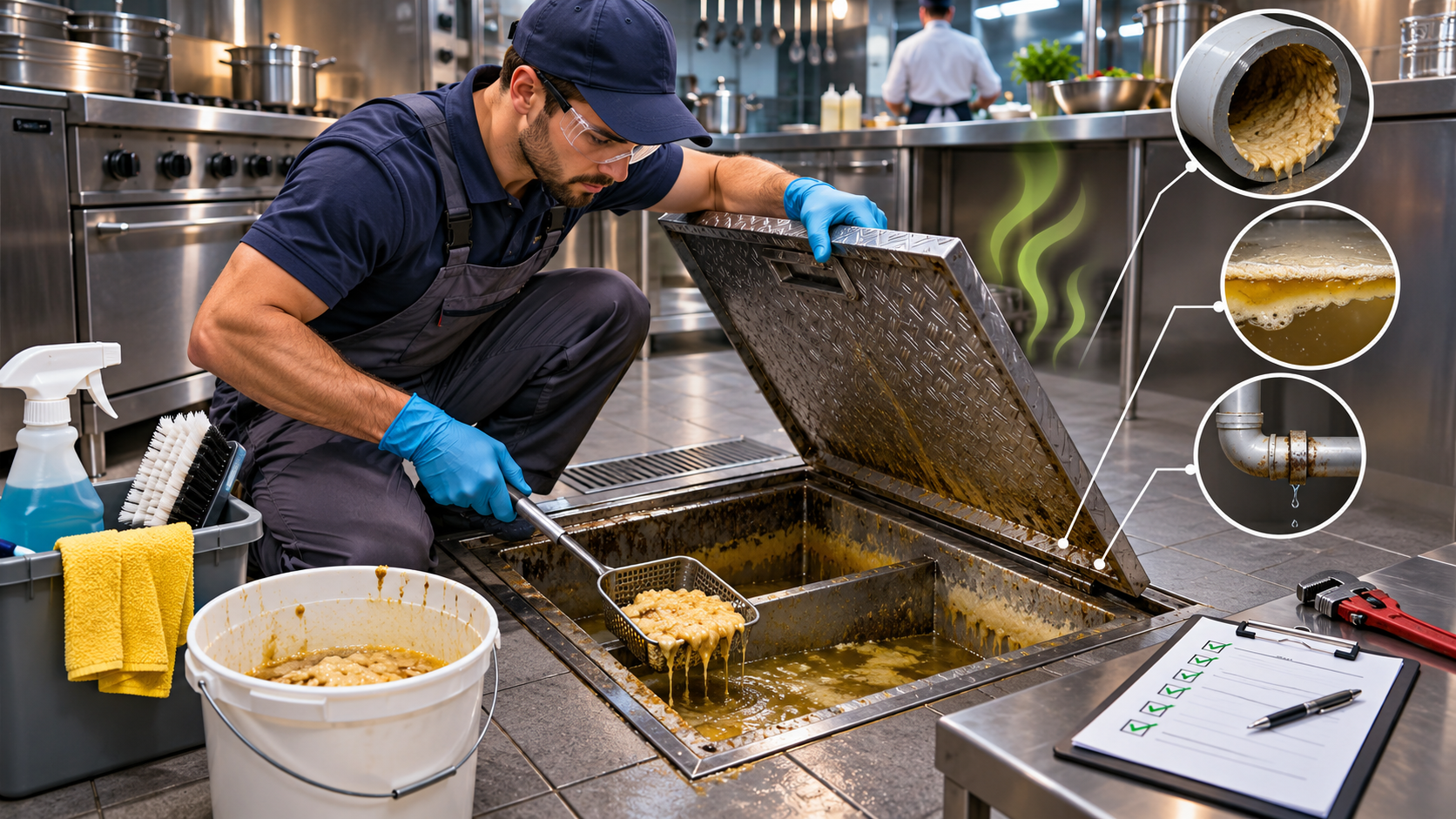
Knowing how to clean a grease trap is an important part of maintaining a commercial kitchen, restaurant or food preparation business. Grease traps are designed to prevent fats, oils, grease and food particles from entering the drainage system, but they only work effectively when they are regularly inspected, emptied and maintained.
When a grease trap is neglected, accumulated waste can cause unpleasant smells, slow-draining sinks, overflowing wastewater and expensive plumbing blockages. In busy kitchens, these problems can disrupt food preparation, affect hygiene and require urgent attention.
Regular grease trap cleaning helps protect the drainage system and allows the equipment to continue separating grease from wastewater. While trained staff may carry out certain routine maintenance tasks, complete cleaning and waste removal should be handled by suitably equipped professionals, particularly for larger commercial installations.
This guide explains how grease traps work, how they are professionally cleaned, how often maintenance may be needed, what causes unpleasant odours and when to arrange professional grease trap servicing.
What Is a Grease Trap and How Does It Work?
A grease trap is a plumbing device designed to capture fats, oils and grease before they enter the main drainage or sewer system. These substances are commonly referred to as FOG and are produced during cooking, food preparation and washing dishes.
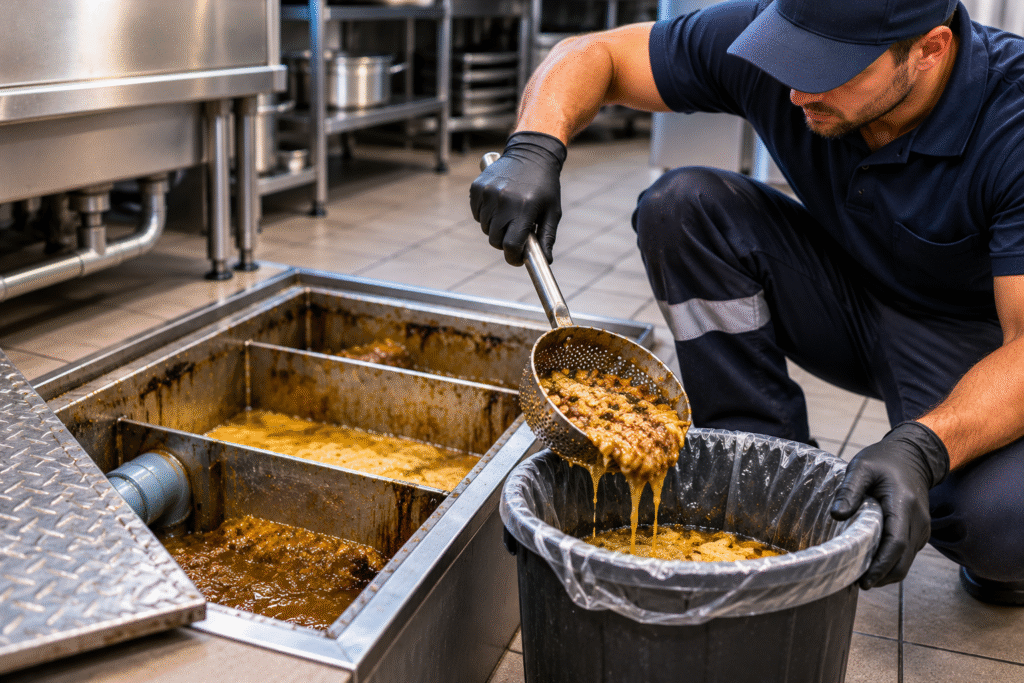
When greasy wastewater enters a typical passive grease trap, its flow slows down. Heavier food particles and solids settle towards the bottom, while lighter fats, oils and grease rise towards the surface. The water between these layers can then pass through the outlet towards the drainage system.
Over time, the floating grease layer and settled solids become thicker. If they are not removed, they reduce the trap’s effective capacity and can allow grease or other material to pass into the downstream pipes.
The United Utilities Foodservice Fat, Oil and Grease Management Guide explains that grease traps retain grease and food debris to help protect downstream sewers, but their effectiveness depends on proper servicing and waste removal.
For commercial properties in Johannesburg and surrounding areas, Savvy Plumbing’s grease trap services include cleaning, pumping, repairs and installations.
Why Is Regular Grease Trap Cleaning Important?
Grease traps continuously collect waste while the kitchen is operating. Without a suitable cleaning schedule, the accumulated grease and food particles can eventually interfere with the movement of wastewater.
Regular cleaning is important for several reasons:
- Preventing blocked drains: Removing grease before it accumulates helps reduce the risk of obstructions in the trap and connected pipework.
- Reducing unpleasant odours: Decomposing food waste and grease can create strong smells around the kitchen or drainage system.
- Protecting kitchen operations: A blocked or overflowing grease trap can interrupt washing, cleaning and food preparation.
- Supporting hygiene: Routine maintenance helps prevent accumulated wastewater and waste from becoming a sanitation problem.
- Reducing repair costs: Preventative maintenance can help avoid emergency drain cleaning and damage caused by persistent blockages.
- Supporting wastewater compliance: Appropriate grease management helps businesses meet applicable local wastewater requirements.
The City of Cape Town’s guidance on grease traps highlights the importance of keeping fats, oils and grease out of sewer infrastructure. Its requirements apply within Cape Town’s jurisdiction; Johannesburg businesses should confirm the applicable municipal requirements for their premises.
How to Clean a Grease Trap: Step-by-Step Process
Proper grease trap cleaning involves more than removing the visible grease floating on the surface. A complete service should address the accumulated contents, internal surfaces, removable components and the condition of the trap itself.
The following steps explain the typical professional cleaning process. Exact procedures depend on the type, size and design of the equipment, and full waste removal should be carried out by trained personnel using suitable equipment and lawful disposal arrangements.
Step 1: Prepare the Area and Stop Wastewater Flow
Before servicing begins, kitchen staff should be informed that the grease trap is temporarily unavailable. Water use from connected sinks and equipment should be stopped to prevent additional wastewater entering the unit during maintenance.
The working area should be protected and suitable personal protective equipment used. Grease trap contents can contain contaminated wastewater, decomposing food waste and potentially harmful substances.
Large grease interceptors, underground tanks and confined spaces present additional hazards. Staff should never enter a grease interceptor or attempt confined-space work without the appropriate specialist training, equipment and procedures.
Step 2: Inspect the Grease Trap
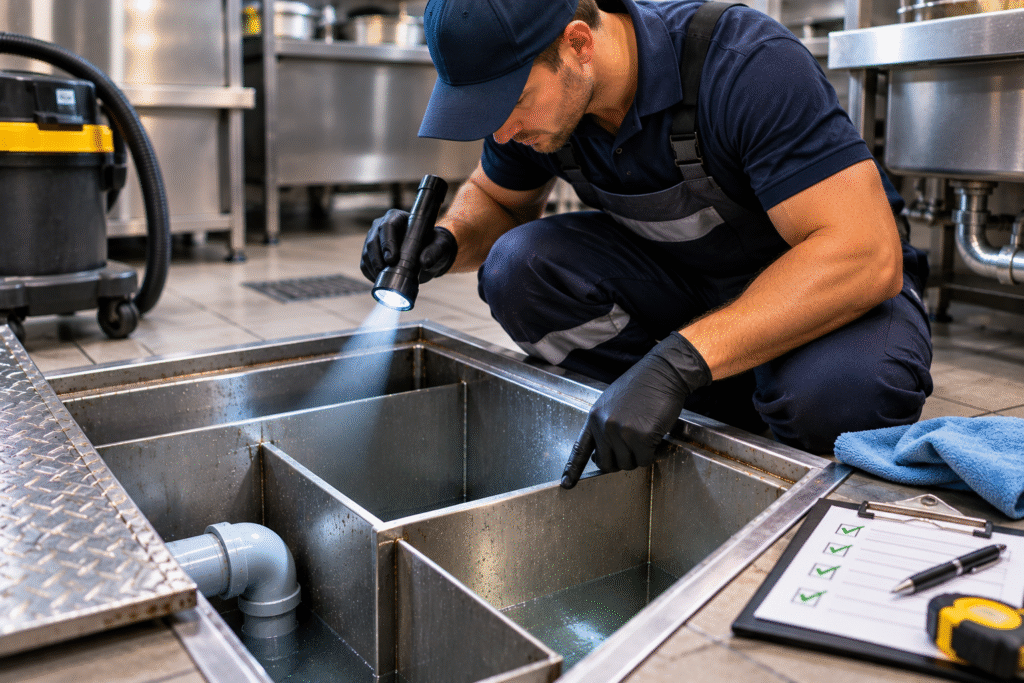
The technician checks the condition of the grease trap, access covers, seals, internal components and the visible level of accumulated grease and solids.
This inspection can help identify whether the unit is overdue for cleaning, whether components are damaged and whether the cleaning frequency needs to be adjusted.
Step 3: Remove Accumulated Grease and Wastewater
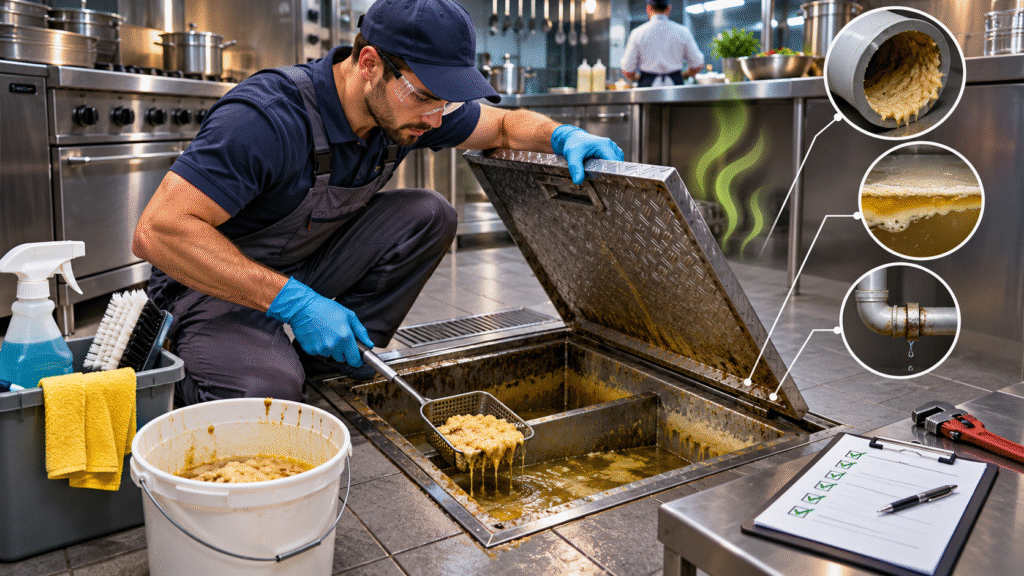
The floating grease, wastewater and settled solids are removed using suitable equipment. Larger commercial grease traps may require professional pumping or vacuum equipment to remove the contents thoroughly.
Removing only the surface grease may leave substantial deposits at the bottom of the trap. These deposits can continue decomposing and may contribute to odours and reduced performance.
Grease trap waste should be contained and transported for appropriate disposal. It should not be poured back into sinks, toilets, stormwater drains or the sewer system.
Step 4: Clean Internal Surfaces and Components
Once the contents have been removed, accumulated residue can be cleaned from accessible internal walls, baffles, covers and other components in accordance with the manufacturer’s instructions.
Baffles are important because they help control the flow of wastewater through the trap. Damaged or missing baffles can reduce the equipment’s ability to retain grease effectively.
Care should be taken not to damage seals, fittings or other internal parts during cleaning. Waste and washings must be collected or managed through the appropriate waste-handling process.
Step 5: Inspect the Inlet and Outlet
The inlet and outlet should be checked for visible restrictions, grease accumulation and damaged components. A grease trap may be clean internally while the connected drainage pipe still contains a blockage.
If the outlet is obstructed or wastewater continues backing up, additional drain cleaning or inspection may be required.
Step 6: Reassemble and Check Operation
After cleaning, the grease trap is reassembled and returned to service according to the manufacturer’s instructions. Some systems require refilling with clean water before normal use resumes.
The technician should check that covers and seals are properly secured and that wastewater can move through the system without obvious leakage or backing up.
Step 7: Record the Cleaning and Schedule Maintenance
The final step is to record when the trap was cleaned, what was removed, whether any defects were found and when the next service should take place.
Keeping maintenance records makes it easier to identify whether the grease trap is filling faster than expected and provides useful documentation for property management and applicable wastewater compliance requirements.
How Often Should a Grease Trap Be Cleaned?
There is no single cleaning interval that suits every grease trap. The correct schedule depends on the size and type of equipment, the amount of cooking taking place, the quantity of fats and oils entering the system and the manufacturer’s instructions.
A small grease trap serving a busy kitchen may fill more quickly than a larger interceptor handling a similar volume of wastewater. Restaurants using deep fryers, preparing large quantities of meat or washing heavily greased cookware may also require more frequent maintenance.
The Singapore National Water Agency’s grease trap guidance recommends cleaning at least once every two weeks for food establishments within its jurisdiction, with more frequent cleaning where grease loading is high. This is a useful example of preventative maintenance guidance, not a universal requirement or a Johannesburg municipal rule.
For businesses in South Africa, the appropriate schedule should be established using the equipment manufacturer’s guidance, observed accumulation levels, professional advice and any applicable local requirements.
Grease Trap Maintenance Schedule
The following table provides a practical starting point for organising grease trap maintenance. These are suggested management activities rather than fixed legal cleaning intervals.
| Maintenance Activity | Suggested Frequency | Purpose |
|---|---|---|
| Remove food scraps before washing | During every kitchen shift | Reduce solids entering the grease trap |
| Check accessible sink strainers | Daily | Prevent food particles entering drainage pipes |
| Inspect accessible grease trap condition | Regularly, according to equipment instructions | Identify excessive buildup, leaks and odours |
| Clean removable strainer baskets | As required, often daily in busy kitchens | Prevent solids restricting flow |
| Complete professional grease trap cleaning | Based on accumulation, system design and applicable requirements | Remove grease, solids and wastewater thoroughly |
| Inspect baffles, seals and connected pipework | During scheduled servicing | Identify defects and restrictions |
| Review cleaning records | After every service | Adjust maintenance frequency when necessary |
If grease and solids accumulate rapidly between services, the maintenance interval may need to be shortened. Increasing kitchen production without reviewing the grease trap’s capacity can also place additional strain on the system.
How to Stop a Grease Trap From Smelling
Unpleasant grease trap smells are a common concern for restaurants and commercial kitchens. A properly maintained grease trap can still have some odour when opened for servicing, but strong persistent smells around the kitchen may indicate that maintenance or repairs are required.
Common causes of grease trap odours include accumulated food waste, decomposing grease, overdue cleaning, damaged covers, poorly fitted seals and problems with the connected drainage system.
To reduce unpleasant smells:
- Arrange regular removal of accumulated grease and solids.
- Remove food scraps from dishes before washing.
- Keep sink strainers clean and correctly positioned.
- Check that grease trap covers and seals are correctly fitted.
- Investigate slow drainage, recurring blockages and persistent sewer-like smells.
- Ensure the trap is serviced according to the manufacturer’s recommendations.
Using strong fragrances or pouring chemicals into the trap may temporarily mask a smell without removing the accumulated waste causing it.
If the smell returns shortly after cleaning, the trap may have a damaged seal, a ventilation issue, a blocked outlet or another plumbing defect that needs investigation.
Signs That Your Grease Trap Needs Cleaning
Many grease trap problems develop gradually. Recognising the early warning signs can help a business arrange servicing before wastewater begins overflowing or kitchen operations are interrupted.
Common warning signs include:
- Slow-draining sinks: Wastewater takes longer than usual to drain from connected kitchen fixtures.
- Persistent unpleasant smells: Strong grease or sewage odours remain around the trap or nearby drains.
- Visible grease accumulation: A thick layer of grease is present during a safe, authorised inspection.
- Wastewater backing up: Water begins returning through connected sinks or floor drains.
- Frequent drain blockages: The same drainage problems continue despite previous clearing.
- Overflowing grease trap: Wastewater escapes from the unit or surrounding drainage connections.
If wastewater is overflowing or backing up into food preparation areas, stop using affected fixtures and arrange prompt professional assistance. The problem may involve both the grease trap and the downstream drainage system.
Can You Clean a Grease Trap Yourself?
Some routine grease management tasks can be completed by appropriately trained kitchen or maintenance staff. These may include emptying accessible food strainers, removing food scraps before washing and performing permitted checks specified in the manufacturer’s instructions.
However, complete grease trap cleaning is different from routine housekeeping. Removing accumulated grease, wastewater and settled solids can involve contaminated waste, heavy equipment, difficult access and disposal requirements.
Larger grease interceptors and underground systems should be serviced by suitably trained and equipped professionals. Employees should not attempt to enter tanks or confined spaces, and grease trap waste must not be disposed of through the property’s drainage system.
For commercial kitchens that require complete cleaning, pumping or repairs, Savvy Plumbing offers professional grease trap cleaning and repair services.
What Should You Avoid When Cleaning a Grease Trap?
Some common cleaning shortcuts can create more problems than they solve. Grease traps are designed to capture fats and oils, so methods that simply move grease further into the drainage system can undermine their purpose.
Avoid the following practices:
- Pouring boiling water into the trap: Hot water can temporarily soften grease and move it further downstream, where it may cool and accumulate again.
- Using chemicals to push grease through: Chemical products are not a substitute for proper removal and disposal of accumulated waste.
- Removing only surface grease: Food particles and sludge can remain at the bottom and continue restricting capacity.
- Disposing of waste into another drain: This simply transfers the problem elsewhere in the drainage system.
- Ignoring damaged baffles or seals: Internal defects can prevent the equipment from working correctly.
- Skipping maintenance records: Without records, it becomes harder to determine whether the cleaning schedule is adequate.
The City of Toronto’s grease interceptor maintenance guidance similarly warns against using chemicals, enzymes or hot water to move grease through interceptors because grease can accumulate again further downstream. This is an example of established maintenance guidance, not a statement of Johannesburg’s legal requirements.
What Happens if a Grease Trap Is Not Cleaned?
When grease trap maintenance is neglected, accumulated grease and solids gradually occupy more of the space needed for wastewater separation. Eventually, the trap may struggle to retain additional waste.
Grease can then pass into the outlet pipe, where it may cool, accumulate and restrict drainage. Food particles and other debris can become trapped in these deposits, contributing to more severe blockages.
Possible consequences include overflowing wastewater, unpleasant odours, blocked kitchen sinks, emergency plumbing callouts, damaged drainage components and disruption to business operations.
When blockages extend beyond the grease trap, professional drain cleaning and plumbing services may be required to restore normal wastewater flow.
Grease Trap Cleaning vs Grease Trap Repair
Not every grease trap problem can be resolved through cleaning alone. Although accumulated grease is a common cause of poor performance, damaged components and unsuitable installations can also create recurring problems.
Grease trap cleaning involves removing accumulated fats, oils, grease, wastewater and solids so the unit can continue operating effectively.
Grease trap repair involves correcting a physical defect such as a damaged baffle, leaking connection, faulty cover, damaged seal or other problem affecting the equipment.
Some installations may also be too small for the amount of greasy wastewater produced by the business. In those situations, more frequent cleaning may be necessary, but a professional assessment may also identify a need for a larger or more suitable system.
Savvy Plumbing provides grease trap cleaning, installation and repair services for commercial kitchens and food preparation businesses.
How Much Does Grease Trap Cleaning Cost?
The cost of grease trap cleaning depends on the type and size of the system, how much waste has accumulated, how accessible the equipment is and whether pumping, repairs or additional drain cleaning are required.
A small, accessible grease trap may require a different service approach from a large underground interceptor that needs specialist pumping equipment and waste transport.
The condition of the trap can also affect the work involved. A system that has been neglected for an extended period may contain heavy grease deposits, damaged components or blocked outlet pipes requiring additional attention.
For an accurate quotation, a plumbing contractor may need information about the grease trap’s location, approximate capacity, previous maintenance history and the problems currently being experienced.
Businesses in Johannesburg can contact Savvy Plumbing to discuss grease trap cleaning requirements and request a quotation.
Grease Trap Maintenance Tips for Restaurants and Commercial Kitchens
Professional cleaning is important, but everyday kitchen practices also influence how quickly a grease trap fills. Reducing the amount of grease and food waste entering the system can improve performance between scheduled services.
Practical maintenance habits include:
- Scrape leftover food into the appropriate waste container before washing dishes.
- Remove excess cooking oil and grease from pots and pans before placing them in the sink.
- Use suitable sink strainers to catch food particles.
- Arrange appropriate collection and disposal of used cooking oil.
- Train kitchen staff on which materials must not enter the drainage system.
- Keep a record of grease trap inspections, cleaning and repairs.
- Review the cleaning schedule when kitchen activity or food production increases.
- Investigate recurring drainage problems instead of repeatedly treating the symptoms.
The City of Cape Town also recommends collecting waste oil separately and using sink strainers to prevent food particles entering the drainage system.
These practices can reduce the amount of material reaching the grease trap, but they do not eliminate the need for scheduled cleaning and professional maintenance.
When Should You Call a Professional for Grease Trap Cleaning?
Professional grease trap cleaning should be arranged as part of a planned maintenance programme rather than only when the equipment becomes blocked.
However, urgent attention may be necessary when wastewater is backing up into kitchen sinks, the grease trap is overflowing, persistent odours are affecting the premises or the equipment is no longer draining properly.
Repeated blockages after cleaning can indicate a problem with the outlet pipe, internal components, system capacity or downstream drainage. A professional inspection can help identify the cause and determine whether additional cleaning, repair or replacement is required.
Savvy Plumbing and Construction provides commercial plumbing services in Johannesburg and surrounding areas, including grease trap cleaning, pumping, repairs and installations.
For assistance with grease trap maintenance, visit the grease trap service page or contact Savvy Plumbing to request a quotation.
Frequently Asked Questions About Grease Trap Cleaning
How do you clean a grease trap properly?
Proper grease trap cleaning involves stopping connected wastewater flow, inspecting the unit, removing accumulated grease, wastewater and solids, cleaning accessible internal surfaces and components, checking the inlet and outlet, and returning the system to service according to the manufacturer’s instructions. Complete cleaning and waste removal should be performed by suitably trained personnel.
How often should a grease trap be cleaned?
The cleaning frequency depends on the grease trap’s size, the volume of wastewater, the amount of grease produced and the manufacturer’s guidance. Busy commercial kitchens may need more frequent servicing. A professional can help establish an appropriate schedule based on observed accumulation and applicable local requirements.
Why does my grease trap smell bad?
Persistent grease trap smells can be caused by decomposing food waste, accumulated grease, overdue cleaning, damaged seals, poor drainage or other plumbing problems. Cleaning the trap and checking its condition can help identify and resolve the source of the odour.
Can I clean a grease trap myself?
Trained staff may carry out permitted routine tasks such as cleaning accessible strainers and removing food scraps before washing. Complete grease trap cleaning, pumping and waste disposal should be handled by suitably equipped professionals, particularly for large commercial or underground systems.
Can I pour hot water down a grease trap?
Hot water should not be used as a substitute for grease trap cleaning. It can temporarily soften grease and move it further into the drainage system, where it may cool and accumulate again. Proper maintenance requires the physical removal and appropriate disposal of grease and solids.
What happens if a grease trap is not cleaned?
Without regular cleaning, grease and solids accumulate inside the trap, reducing its effective capacity. This can lead to unpleasant odours, slow drainage, blocked outlet pipes, overflowing wastewater and disruption to commercial kitchen operations.
How do I know if my grease trap is blocked?
Warning signs include slow-draining kitchen sinks, wastewater backing up, overflowing grease traps, persistent unpleasant smells and recurring blockages. A professional inspection can determine whether the problem is inside the grease trap or further along the connected drainage system.
Does a grease trap need professional maintenance?
Commercial grease traps generally benefit from scheduled professional maintenance to remove accumulated waste, inspect components and identify developing problems. The service requirements depend on the type of installation, manufacturer’s guidance and applicable local wastewater and waste-disposal rules.