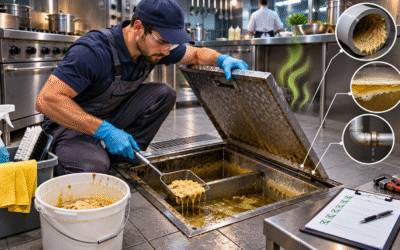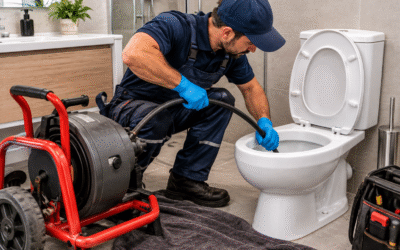
A blocked sewer is an obstruction in a shared drain or sewer line that stops wastewater leaving several fixtures at once. Warning signs include several slow drains, gurgling toilets, sewage backing up into a shower or floor drain, persistent sewer smells and wastewater appearing outside. Stop unnecessary water use and have the drainage system inspected.
Sewer blockages can develop gradually as grease, waste and other materials accumulate inside drainage pipes. They can also occur suddenly when tree roots enter damaged pipes, foreign objects become lodged in the system or underground pipework deteriorates.
Identifying the warning signs early can help prevent wastewater from overflowing into bathrooms, kitchens, gardens or other areas of the property. It can also make it easier for a plumber to determine whether the problem requires drain cleaning, camera inspection or repairs to damaged underground pipes.
This guide explains the common causes of blocked sewer lines, how to recognise the symptoms, what to do when sewage starts backing up and how professional plumbers diagnose and repair sewer drainage problems.
Table of Contents
What Is a Blocked Sewer?
A blocked sewer occurs when wastewater cannot flow normally through a sewer pipe because part or all of the pipe has become obstructed. The blockage restricts the movement of wastewater towards the municipal sewer network or another approved wastewater disposal system.
Most residential properties have several wastewater fixtures connected to a shared drainage system. Toilets, basins, showers, baths and kitchen sinks discharge wastewater through individual waste pipes that eventually connect to larger drains.
When a blockage develops in one of these larger drainage lines, wastewater from multiple fixtures can be affected. This is why a blocked sewer may cause symptoms in different parts of the property rather than only at one toilet or sink.
A blocked sewer can occur within the property’s private drainage installation or in the municipal sewer network. Establishing the location is important because it influences the type of repair required and who is responsible for arranging the work.
For problems involving private drainage systems, Savvy Plumbing’s blocked drain unblocking service in Gauteng can assist with blocked drains, drainage inspections and plumbing repairs.
What Are the Warning Signs of a Blocked Sewer?
The main warning signs of a blocked sewer are several fixtures draining slowly at the same time, a toilet gurgling when another fitting is used, wastewater backing up into a shower or floor drain, persistent sewer smells, and sewage appearing at an outdoor inspection point. A single slow toilet is more often a local blockage. If sewage is backing up, stop using water and get the shared drain inspected.
1. Multiple Drains Are Slow
One of the clearest indications of a possible main sewer blockage is when several plumbing fixtures begin draining slowly at approximately the same time.
For example, the toilet may flush slowly while the shower and bathroom basin also struggle to drain. This can suggest that the obstruction is located in a shared drainage pipe rather than immediately beneath one fixture.
2. Toilets Make Gurgling Sounds
Gurgling sounds can occur when air and wastewater movement through the drainage system is disrupted. A toilet may produce unusual bubbling sounds when another fixture is used, particularly if the connected drain is partially restricted.
Gurgling does not automatically confirm a blocked sewer because ventilation problems can produce similar symptoms. However, gurgling combined with slow drainage or wastewater backups is a reason to investigate the drainage system.
3. Wastewater Backs Up Through Other Fixtures
When wastewater cannot move through the main drainage line, it may return through another connected fixture. Water from a flushing toilet, for example, may appear through a shower or floor drain if the shared drainage system is obstructed.
This is a more serious warning sign because the wastewater may contain sewage and other contaminants. Stop unnecessary water use and arrange professional assistance rather than continuing to flush or run taps.
4. Persistent Sewer Smells
Unpleasant sewer smells around drains, bathrooms, outdoor inspection chambers or other plumbing areas can indicate a drainage problem.
Although smells can have several causes, persistent odours combined with slow drains or wastewater backing up may indicate that sewage is not flowing through the system normally.
5. Sewage Appears Outside the Property
Wastewater appearing near an outdoor inspection chamber, gully, drain cover or underground sewer route can indicate an obstruction or damaged pipe.
Outdoor sewage overflows should be treated seriously because contaminated wastewater can create health risks and affect surrounding soil, paving and landscaping.
Blocked Sewer Warning Signs and What They Mean
The following table summarises common symptoms and the drainage problems they may indicate.
| Warning Sign | Possible Cause | Recommended Action |
|---|---|---|
| Several drains are slow | Partial blockage in a shared drainage pipe | Arrange an inspection if the problem persists |
| Toilet gurgles when another fixture is used | Restricted drainage or a ventilation problem | Have the drainage and venting system assessed |
| Sewage backs up into a shower | Possible main drain or sewer blockage | Stop water use and arrange urgent assistance |
| Persistent sewer smells | Wastewater buildup, drainage defects or trap problems | Investigate the source rather than masking the smell |
| Sewage overflows outside | Blocked or damaged underground sewer pipe | Keep people away and arrange investigation or municipal reporting |
| Blockage repeatedly returns | Roots, damaged pipes or a persistent obstruction | Consider professional drain inspection |
| Only one toilet is blocked | Possible local obstruction near the toilet | Assess the individual fixture before assuming the main sewer is blocked |
These symptoms are useful indicators, but the exact location and cause of a blockage cannot always be confirmed without inspecting the drainage system.
What Causes a Blocked Sewer Line?
Sewer blockages can result from unsuitable materials entering the drainage system, gradual accumulation inside pipes or physical defects affecting underground drainage infrastructure.
Understanding the cause is important because simply clearing the obstruction may not prevent the problem from returning.
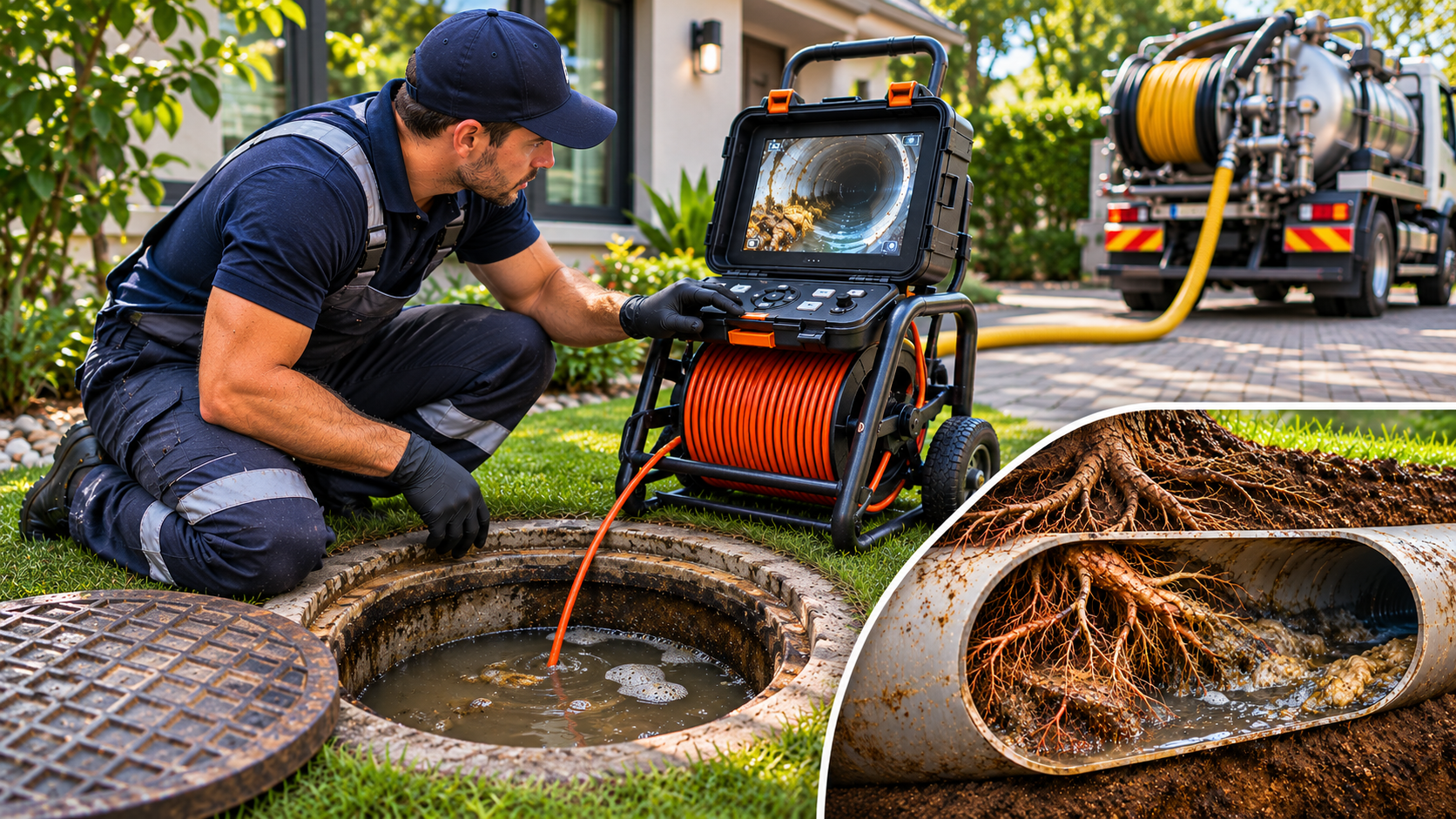
Tree Roots Entering Sewer Pipes
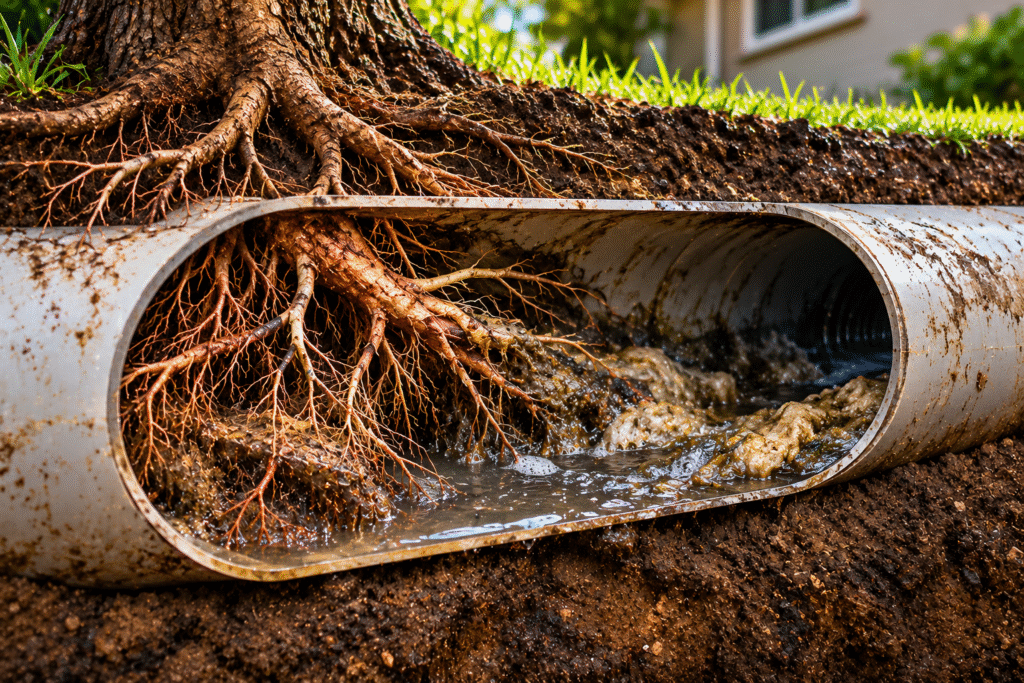
Tree roots can enter underground sewer pipes through cracks, damaged joints or other vulnerable openings. Once inside, the roots can grow and restrict the available space for wastewater to flow.
Toilet paper, waste and other material can then accumulate around the roots, eventually causing a partial or complete blockage.
Removing the roots may restore drainage temporarily, but damaged pipework may also require repair to prevent further root intrusion.
Grease and Fat Accumulation
Cooking fats, oils and grease can accumulate inside drainage pipes when they are poured into sinks. As grease cools and combines with other materials, it can form deposits that restrict wastewater flow.
The City of Johannesburg’s September 2026 drainage guidance warns residents not to pour grease and fat down kitchen sinks because they can accumulate, restrict sewage flow and contribute to blockages.
Commercial kitchens should also maintain appropriate grease management systems. Savvy Plumbing’s guide to cleaning and maintaining a grease trap explains how routine grease removal can help protect connected drainage pipes.
Wet Wipes and Sanitary Products
Wet wipes, nappies, sanitary products, cotton products and other unsuitable items can become trapped inside sewer pipes and contribute to blockages.
Unlike ordinary toilet waste, many of these materials do not break down readily in the drainage system. They can collect around bends, damaged sections and existing deposits.
Johannesburg’s municipal guidance specifically encourages residents to keep wipes, sanitary products, toys and other solid materials out of toilets and domestic drains.
Damaged or Collapsed Sewer Pipes
Underground sewer pipes can deteriorate over time because of ageing materials, ground movement, root intrusion, poor installation or other physical damage.
A cracked, displaced or collapsed section can restrict wastewater flow and create a location where solids accumulate.
These problems often require more than routine drain cleaning. Depending on the damage, the affected pipe may need to be repaired or replaced.
Foreign Objects and Building Debris
Objects that should never enter a sewer can cause severe obstructions. These include rags, plastic, stones, construction rubble and other solid materials.
Johannesburg Water has previously documented blockages caused by inappropriate waste and debris entering municipal sewer systems, including in its 2019 sewer blockage preventative maintenance programme.
Incorrect Pipe Falls and Drainage Installation Problems
Gravity drainage pipes need suitable gradients to move wastewater and solids through the system. Where pipes are poorly installed, displaced or sagging, material may settle instead of being carried away effectively.
A recurring blockage may therefore indicate a problem with the physical condition or layout of the drainage system rather than simply excessive waste.
Blocked Sewer vs Blocked Toilet: What’s the Difference?
A blocked toilet and a blocked sewer can produce similar symptoms, but the location of the obstruction is often different.
A toilet blockage usually involves an obstruction within the toilet outlet or nearby waste pipe. A sewer blockage affects a larger drainage line and may interfere with wastewater from several fixtures.
| Feature | Blocked Toilet | Blocked Sewer |
|---|---|---|
| Typical location | Toilet outlet or nearby pipe | Shared drain or sewer line |
| Fixtures affected | Often one toilet | May affect several fixtures |
| Common causes | Toilet paper, wipes or foreign objects | Grease, roots, debris, pipe defects or accumulated waste |
| Typical symptoms | Toilet bowl fills or drains slowly | Multiple slow drains, gurgling or sewage backups |
| Possible solution | Appropriate local blockage removal | Drain cleaning, inspection or sewer pipe repair |
If only one toilet is affected, read Savvy Plumbing’s blocked toilet guide for advice on identifying and safely dealing with a local toilet blockage.
When several fixtures are affected, the shared drainage system should be investigated before repeated flushing or additional water use causes wastewater to back up elsewhere.
What Should You Do if Your Sewer Is Blocked?
If you suspect a blocked sewer, the immediate priority is to prevent additional wastewater from entering an already restricted drainage system.
The following steps can help limit damage while the problem is investigated.
- Stop unnecessary water use: Avoid flushing toilets, running washing machines, using dishwashers or draining baths and sinks until the blockage has been assessed.
- Check which fixtures are affected: Determine whether the problem involves one toilet or several connected drains.
- Keep people away from sewage: Prevent children, pets and other occupants from entering areas contaminated by wastewater.
- Avoid opening sewer covers: Do not enter or lean into inspection chambers or manholes. Sewer gases, contaminated wastewater and confined spaces can present serious hazards.
- Do not pour chemicals into the drains: Chemical drain cleaners are unlikely to resolve root intrusion, damaged pipes or large sewer obstructions and can create additional hazards.
- Arrange professional assistance: Contact a qualified plumbing contractor if the problem appears to involve the property’s private sewer system.
- Report suspected municipal blockages: If sewage is overflowing from public infrastructure or several neighbouring properties are affected, report the problem to the relevant municipality.
For Johannesburg residents, the City of Johannesburg’s fault-reporting service provides information about logging sewerage and other municipal infrastructure problems.
Where wastewater is actively entering the property, avoid further water use and arrange prompt assistance to limit the extent of contamination and damage.
Can You Unblock a Sewer Yourself?
Minor blockages affecting an individual sink or toilet may sometimes respond to appropriate household plumbing tools. A blockage in the main sewer line is different because it can involve larger pipes, underground infrastructure and contaminated wastewater.
Attempting to clear a sewer with unsuitable tools can damage pipework or push an obstruction deeper into the system. Opening underground inspection chambers without the necessary knowledge and equipment can also expose people to hazardous conditions.
Professional drain cleaning is generally the safer option when multiple fixtures are affected, sewage is backing up, roots are suspected or the blockage repeatedly returns.
For smaller household blockages, Savvy Plumbing’s general plumbing work guide provides further information about common plumbing repairs and maintenance.
How Do Professional Plumbers Unblock a Sewer?
Professional sewer clearing begins with identifying the symptoms and determining the likely location of the obstruction. The method used depends on the pipe size, accessibility, condition and suspected cause of the blockage.
Drain Inspection and Assessment
A plumber may inspect accessible drainage points, assess which fixtures are affected and consider the layout of the property’s sewer system.
The initial investigation helps determine whether the blockage is close to the building, further along an underground pipe or potentially within municipal infrastructure.
Mechanical Drain Cleaning
Mechanical drain-cleaning equipment can be used to break up or remove suitable obstructions from drainage pipes.
The equipment must be appropriate for the pipe material, diameter and condition. Aggressive cleaning methods can damage deteriorated pipework if the condition of the system is not properly considered.
High-Pressure Water Jetting
High-pressure water jetting uses specialised equipment to direct water through the sewer pipe to dislodge and remove accumulated material.
Savvy Plumbing also carries out high-pressure drain and stormwater pipe cleaning where the blockage and pipe condition make jetting appropriate.
Depending on the equipment and pipe condition, jetting can help remove grease deposits, sludge and certain types of obstruction.
Johannesburg Water has documented the use of high-pressure sewer jetting equipment as part of its preventative maintenance and blockage-clearing operations.
Jetting should be carried out by trained operators who can assess whether the pipe is suitable for the pressure and equipment being used.
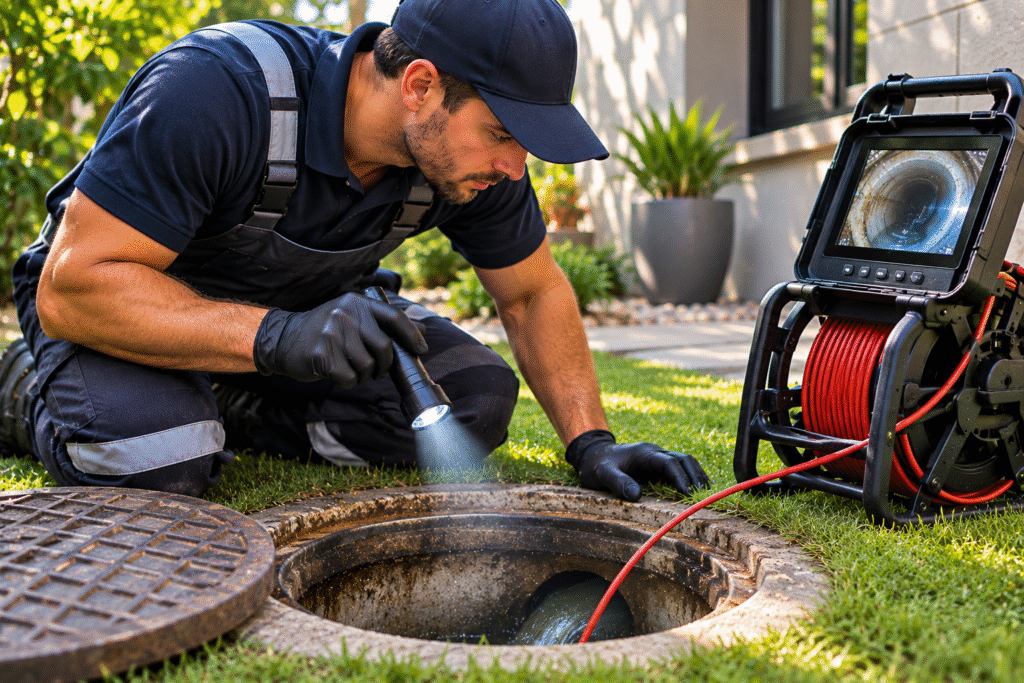
CCTV Drain Camera Inspection
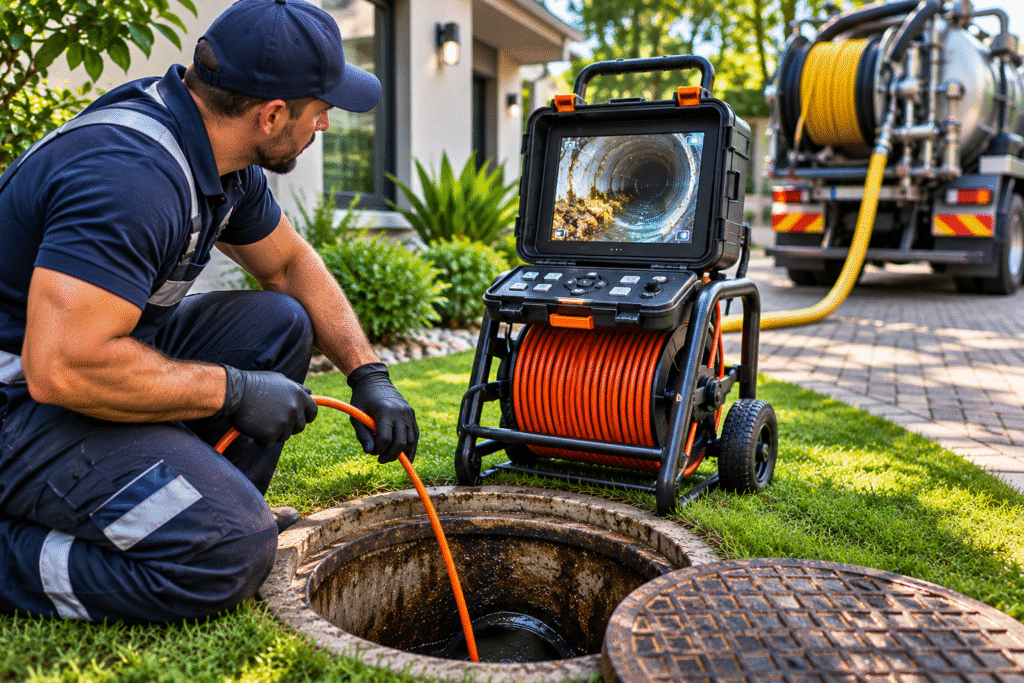
A drain camera inspection can help identify the internal condition of accessible sewer pipes. The camera may reveal root intrusion, cracks, displaced joints, accumulated deposits or other defects that could explain recurring blockages.
A dedicated drain camera inspection can show whether the recurring problem is roots, a collapsed section, a displaced joint or accumulated debris.
Camera inspections are particularly useful when the same sewer line blocks repeatedly or when a plumber suspects that the problem involves damaged underground pipework.
Depending on the blockage, the pipe may need to be cleared before the camera can pass through the affected section.
Sewer Pipe Repair or Replacement
Where the sewer pipe is cracked, collapsed, displaced or otherwise damaged, cleaning alone may not provide a lasting solution.
The plumber may recommend repairing or replacing the affected section after identifying the location and extent of the damage.
For drainage and underground pipework projects, Savvy Plumbing also provides construction and civils services covering drainage and related infrastructure work.
Why Does My Sewer Keep Blocking?
A sewer line that repeatedly blocks may have an underlying problem that has not been corrected.
For example, a drain-cleaning machine may remove enough accumulated material to restore wastewater flow, but if tree roots remain inside a damaged pipe, further material can collect around them and cause another blockage.
Recurring sewer blockages can also result from displaced pipe joints, inadequate drainage gradients, collapsed sections, heavy grease accumulation or continued disposal of unsuitable materials.
Johannesburg Water has previously reported repeated sewer blockages in areas affected by debris accumulation and damaged infrastructure. Its municipal maintenance reports highlight why recurring problems may require more than simply clearing the immediate obstruction.
If the same sewer line blocks regularly, a professional assessment and possible camera inspection can help determine whether a more permanent repair is necessary.
Can Tree Roots Cause a Blocked Sewer?
Yes. Tree roots are a recognised cause of underground sewer blockages, particularly where older pipes have cracks, gaps or deteriorated joints.
Roots can grow into these openings and gradually occupy space inside the pipe. As wastewater moves through the drainage system, toilet paper and other materials can collect around the roots.
Specialist root-cutting equipment may remove the immediate obstruction, but the condition of the pipe should also be considered. If the damaged entry point remains, roots may eventually return.
A camera inspection can help determine whether the pipe needs repair or replacement to address the underlying problem.
How Much Does It Cost to Unblock a Sewer?
The cost of unblocking a sewer depends on the location, severity and cause of the obstruction, as well as the equipment and labour required to restore normal drainage.
A relatively straightforward blockage in an accessible drain may require less work than a deep underground obstruction involving root intrusion or damaged pipework.
Factors that can affect the cost include:
- The location of the blocked sewer pipe
- Accessibility of drainage inspection points
- The severity and type of obstruction
- Whether mechanical cleaning or water jetting is required
- Whether a drain camera inspection is necessary
- The condition of the underground pipework
- Whether excavation or pipe repairs are needed
Because sewer problems vary considerably between properties, an accurate quotation may require a site assessment or inspection.
Homeowners and property managers can contact Savvy Plumbing to discuss a blocked sewer and request assistance.
Who Is Responsible for a Blocked Sewer in Johannesburg?
Responsibility for a blocked sewer depends on where the obstruction is located and the applicable municipal rules.
The City of Johannesburg Water Services By-laws require owners or occupiers to maintain drainage installations and sewer connections on their premises. The by-laws also address the circumstances in which the municipality may clear blockages and recover costs.
The by-laws also provide that if a drainage installation overflows because of an obstruction in the connecting sewer, and the City is reasonably satisfied that the obstruction came from the property’s drainage installation, the owner is liable for the prescribed fee for clearing that blockage.
In practical terms, a blockage within a property’s private drainage installation will generally need to be investigated by the property owner or responsible party. Problems involving public municipal sewer infrastructure should be reported to Johannesburg Water.
For municipal sewer blockages and spillages, the City of Johannesburg’s September 2026 guidance lists Johannesburg Water reporting numbers of 010 061 4470 and 086 056 2874, as well as the email address fault@jwater.co.za.
Residents can also use Johannesburg Water’s Contact Us page to confirm the current fault-reporting numbers and email address, or log a municipal problem through the City of Johannesburg fault-reporting service and obtain a reference number.
If it is unclear whether the blockage is on private or municipal infrastructure, an appropriate drainage assessment can help establish where the problem is occurring. The precise maintenance and cost responsibility should then be confirmed against the applicable rules and circumstances.
How to Prevent Sewer Blockages
Not every sewer blockage can be prevented, especially when underground pipes are damaged or affected by ground movement. However, good household drainage habits can reduce the risk of avoidable obstructions.
The most important preventative measures include:
- Only flush appropriate toilet waste: Keep wet wipes, nappies, sanitary products and other solid materials out of toilets.
- Dispose of grease correctly: Do not pour cooking fats, oils and grease down kitchen sinks.
- Use sink strainers: Prevent food scraps and other debris from entering kitchen waste pipes.
- Investigate recurring drainage problems: Repeated blockages can indicate damaged pipes or other underlying defects.
- Protect underground drainage: Consider the location of sewer pipes when planting trees or carrying out construction work.
- Maintain commercial grease traps: Businesses producing greasy wastewater should follow an appropriate grease trap maintenance programme.
- Arrange professional inspections when needed: Persistent slow drainage or repeated sewer blockages should not be ignored.
The City of Johannesburg encourages residents to keep solid waste, grease and other unsuitable materials out of domestic drains and sewer infrastructure to help prevent blockages and overflows.
Preventative maintenance can also help identify damaged drainage components before they develop into more extensive problems.
When Is a Blocked Sewer an Emergency?
A blocked sewer should be treated as urgent when sewage is overflowing, wastewater is entering the property or several fixtures are unusable because the drainage system cannot discharge normally.
Sewage can contain harmful microorganisms and other contaminants, so affected areas should be kept clear of children, pets and unnecessary foot traffic.
Emergency assistance may be required when:
- Sewage is backing up into bathrooms, showers or floor drains.
- Wastewater is overflowing inside the building.
- An outdoor sewer inspection point is overflowing.
- Several toilets or drainage fixtures cannot be used.
- Contaminated wastewater is affecting occupied or food preparation areas.
Stop unnecessary water use and arrange the appropriate professional or municipal response. Avoid attempting to enter sewer chambers or handle contaminated wastewater without suitable training and protective equipment.
Professional Blocked Sewer Assistance in Johannesburg
A blocked sewer can affect several areas of a property and may indicate more than a simple obstruction. Persistent blockages, sewage backups, root intrusion and damaged underground pipes often require professional investigation and suitable drain-cleaning equipment.
Identifying the actual cause is important because clearing a blockage without addressing damaged pipework or other underlying problems may only provide temporary relief.
Savvy Plumbing provides plumbing, drainage and construction services for residential and commercial properties in Johannesburg and surrounding areas.
Whether the problem involves a blocked sewer pipe, recurring drainage obstruction or damaged underground infrastructure, Savvy Plumbing can assist with assessing the work required and arranging appropriate plumbing or drainage services.
Visit the Savvy Plumbing contact page to discuss your blocked sewer problem and request a quotation.
For a blocked sewer in Johannesburg, contact Savvy Plumbing or call 087 806 6262.
Frequently Asked Questions About Blocked Sewers
How do I know if my main sewer line is blocked?
Common warning signs include several drains becoming slow at the same time, toilets gurgling, persistent sewer smells and wastewater backing up through showers, floor drains or other fixtures. A professional inspection can help confirm whether the main sewer line is blocked.
What causes a blocked sewer pipe?
Common causes include grease accumulation, wet wipes, sanitary products, foreign objects, tree roots, damaged pipe joints, collapsed pipes and incorrect drainage gradients. The underlying cause should be identified when blockages repeatedly return.
Can I unblock a main sewer line myself?
A main sewer blockage is generally best handled by a professional because it may involve underground pipework, contaminated wastewater and specialist drain-cleaning equipment. Avoid opening sewer chambers or using unsuitable tools and chemicals.
How do plumbers clear a blocked sewer?
Plumbers may use mechanical drain-cleaning equipment, high-pressure water jetting or other suitable methods depending on the obstruction and pipe condition. Camera inspections can help identify damaged pipes, root intrusion and recurring drainage problems.
Why does my sewer keep blocking?
Recurring blockages can indicate tree roots, damaged underground pipes, displaced joints, accumulated grease or another persistent restriction. Clearing the immediate blockage may not solve the underlying problem, so further inspection may be necessary.
Can tree roots block a sewer pipe?
Yes. Tree roots can enter sewer pipes through cracks or damaged joints and restrict wastewater flow. Material can collect around the roots, causing repeated blockages. Root removal and pipe repairs may be required to prevent the problem from returning.
Who is responsible for a blocked sewer in Johannesburg?
Responsibility depends on the location of the blockage and the applicable municipal rules. Property owners or occupiers must maintain drainage installations and sewer connections on their premises under Johannesburg’s Water Services By-laws. Suspected municipal sewer blockages should be reported to Johannesburg Water.
When should I call a plumber for a blocked sewer?
Arrange professional assistance when multiple drains are affected, sewage is backing up, a blockage repeatedly returns, underground pipe damage is suspected or the drainage system cannot be used normally. Active sewage overflows should be treated as urgent.