A french drain collects excess groundwater or shallow surface water and redirects it away from gardens, foundations, retaining walls and other vulnerable areas. For South African homeowners, it can be an effective solution when rainwater repeatedly pools in low-lying ground, soil remains waterlogged or moisture gathers close to a building. The system must still be planned around the property’s slope, soil, underground services and legal discharge options. This guide explains how French drain installation works, when it is appropriate and what should be checked before excavation begins.
What is a french drain and how does it work?
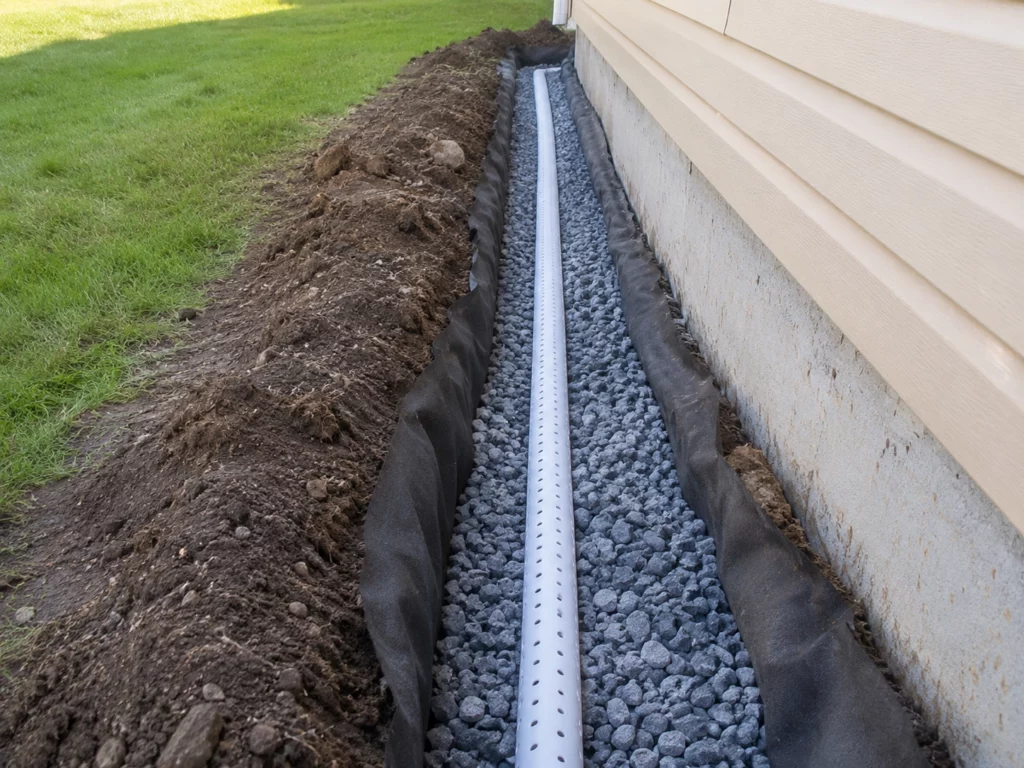
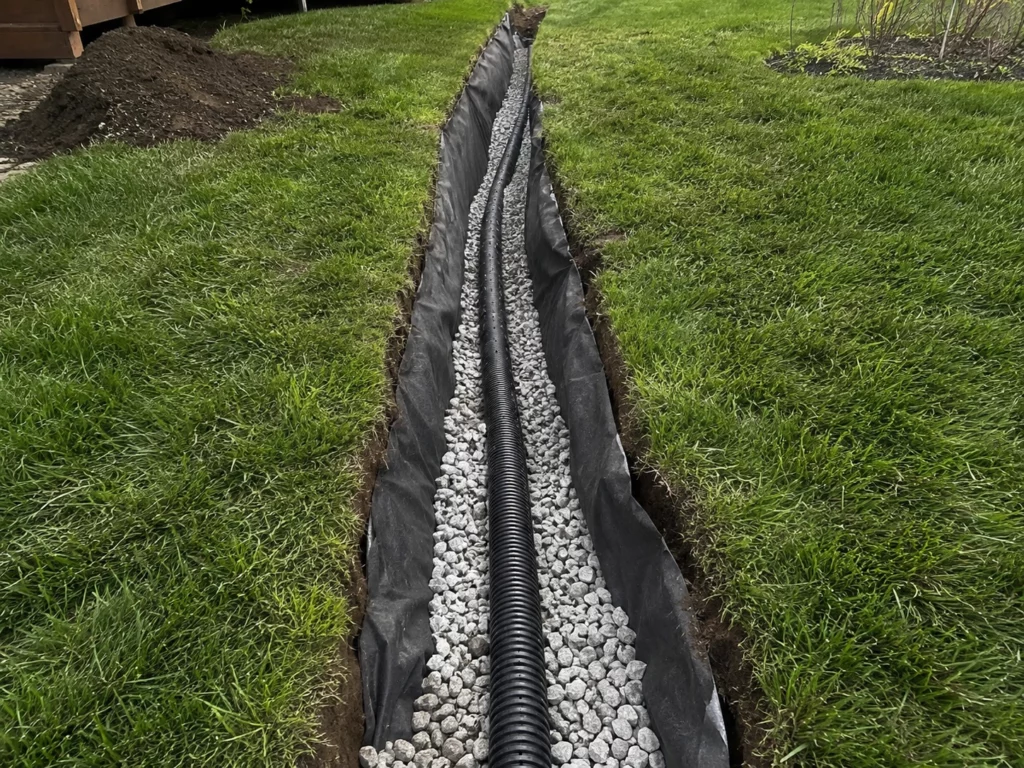
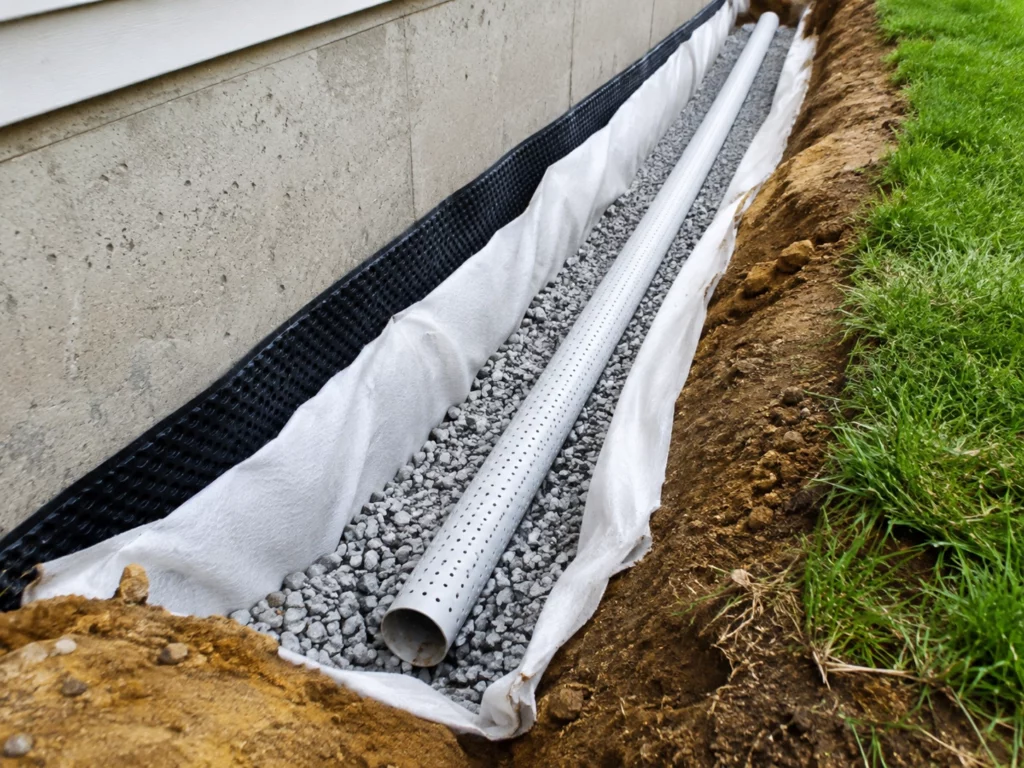
A french drain is a gravel-filled trench that normally contains a perforated drainage pipe wrapped or protected with permeable geotextile fabric. Water moves through the stone into the pipe and is carried along a controlled route toward a suitable outlet, collection point or approved stormwater system.
The system works by providing water with an easier route through the ground. Instead of remaining trapped in clay-heavy soil or collecting beside a wall, the water filters through the drainage stone and enters the perforations in the pipe. The pipe then carries it away from the problem area using the designed fall of the trench.
A French drain is generally installed below the finished ground surface, making it less visible than an open channel. The surface may be finished with decorative stone, lawn or another permeable treatment, depending on the installation design and the amount of water that must enter the trench.
When does a South African property need a French drain?
A property may need a French drain when water repeatedly collects in the same area and cannot drain away naturally. The most common warning signs are waterlogged lawns, damp ground beside foundations, erosion, standing water near paving and moisture pressure behind retaining walls.
- Water remains in the garden for an extended period after rain.
- The ground slopes toward the house instead of away from it.
- Damp patches repeatedly appear near external walls or foundations.
- Soil and mulch are washed out of garden beds during storms.
- Water collects behind a retaining wall or at the bottom of a slope.
- Paving or lawn areas remain soft, muddy or unusable.
These signs do not automatically prove that a French drain is the correct solution. Similar symptoms can be caused by broken water pipes, leaking irrigation, blocked stormwater lines, damaged gutters or downpipes that discharge in the wrong place. The source of the water should therefore be identified before a trench is excavated.
Savvy Plumbing’s guide on how a French drain can solve drainage problems provides additional background on common residential applications.
What must be inspected before French drain installation?
The property’s levels, soil, water source, underground services and discharge point must be inspected before French drain installation begins. A drain cannot work effectively if the installer knows where water is collecting but has not determined where it can safely go.
| Site Check | Why It Matters |
|---|---|
| Source of the water | Confirms whether the issue is rainwater, groundwater, a leak or a blocked pipe. |
| Ground levels and slope | Determines whether water can move toward the proposed outlet by gravity. |
| Soil conditions | Clay, sand, rock and filled ground drain differently and affect trench design. |
| Underground services | Water, sewer, electrical, gas and irrigation lines must be identified before digging. |
| Nearby structures | Foundations, walls, pools, paving and boundary structures can affect the route. |
| Final discharge point | Collected water must be released without flooding another part of the property or a neighbour. |
| Expected water volume | The trench, pipe and outlet must be capable of handling the anticipated flow. |
The outlet decision is especially important. Redirecting water from one wet section of the property into another low point does not solve the drainage problem. Water should also not be discharged in a way that causes erosion, undermines a wall or creates a nuisance on an adjoining property.
How is a French drain installed?
A French drain is installed by planning the route, excavating a correctly graded trench, lining it with geotextile fabric, adding drainage stone, positioning perforated pipe and connecting the system to a suitable outlet. The exact depth, width, pipe diameter and fall depend on the site rather than a single standard layout.
1. Identify the collection area and outlet
The installer first identifies where water enters or gathers and selects a safe destination. Levels should be checked along the full proposed route because a drain that rises or contains unintended low sections may retain water instead of carrying it away.
2. Locate underground pipes and cables
Existing water pipes, sewer lines, stormwater pipes, electrical cables, irrigation systems and other buried services should be located before excavation. The route may need to be adjusted to avoid damaging essential infrastructure.
3. Excavate and grade the trench
The trench is excavated to the dimensions required for the expected water volume and site conditions. Its base must maintain a consistent fall toward the discharge point. Excavation close to foundations or retaining structures may require additional professional assessment.
4. Install fabric, stone and perforated pipe
Permeable geotextile fabric helps separate the surrounding soil from the drainage stone. Washed stone creates open spaces through which water can move, while the perforated pipe collects and transports that water. Fine soil, building rubble or mixed garden stone should not be used as a substitute for proper drainage material.
5. Complete the outlet and reinstate the surface
The pipe is connected to the approved outlet, collection structure or wider stormwater arrangement. The system should be checked before the trench is closed. The surface can then be reinstated with stone, lawn or another finish that does not prevent water from entering the drain where collection is required.
What materials are used in a French drain?
A typical French drain uses permeable geotextile fabric, clean washed drainage stone, perforated drainage pipe and suitable fittings or outlet components. Each material has a specific purpose, and leaving out one component can shorten the working life of the system.
- Geotextile fabric: Helps limit surrounding soil and silt from migrating into the stone layer.
- Washed drainage stone: Creates open spaces that allow water to move toward the pipe.
- Perforated pipe: Collects water along the trench and carries it toward the outlet.
- Solid outlet pipe where required: Carries collected water through areas where further collection is unnecessary.
- Inspection or cleaning access: Allows sections of the system to be checked or cleared where the design requires it.
The selected pipe and stone should suit the installation conditions. A small garden drain dealing with shallow groundwater will not necessarily use the same design as a system protecting a large retaining wall or receiving runoff from an extensive paved area.
Is a French drain the same as a stormwater drain?
No, a French drain and a conventional stormwater drain collect water in different ways. A French drain normally collects water through a permeable stone-filled trench below or near the ground surface, while a stormwater drain may use gutters, channels, catch pits, grates and solid pipes to collect concentrated runoff.
French drains are often better suited to shallow groundwater, saturated soil and water spread across a garden area. Surface channels and grated drains are usually more appropriate for concentrated runoff moving across paving, driveways or entrances. Some properties require both systems: surface drainage for fast-moving runoff and a French drain for water held within the soil.
Where existing stormwater pipes are blocked or filled with roots and debris, installing another drain may not solve the underlying restriction. Savvy Plumbing provides high-pressure drain and stormwater pipe cleaning where existing lines need to be assessed and cleared.
Can roof downpipes discharge directly into a French drain?
Roof downpipes should not automatically be connected to a French drain because concentrated roof runoff can overwhelm a system designed mainly for groundwater or dispersed surface moisture. The expected roof area, rainfall intensity, pipe capacity, soil conditions and final outlet must first be assessed.
A separate solid stormwater pipe, catch pit, attenuation arrangement or approved municipal connection may be more appropriate for roof water. A combined system can be considered where it has been properly sized, but the perforated section should not simply become a dumping point for uncontrolled downpipe flow.
Can a French drain be installed next to a foundation?
A French drain can be installed near a foundation to intercept groundwater, but its position and excavation depth must be planned carefully. Excavating too close to or below existing foundations without proper assessment can disturb supporting soil and create a structural risk.
Foundation damp may also have causes that a French drain cannot correct, including leaking pipes, damaged waterproofing, missing damp-proofing, cracked walls, defective gutters or ground levels that have been raised against the building. These possibilities should be investigated before treating the visible moisture as a drainage-only problem.
Drainage beside retaining walls also requires care. The system must relieve water pressure without removing or washing away the soil supporting the structure. Significant retaining walls, foundation movement or deep excavations may require input from a suitably qualified engineer or other competent professional.
Is a garden French drain the same as a septic soakaway?
No, a garden French drain for groundwater or rainwater should not be confused with a septic drain field, soakaway or effluent-disposal system. In South Africa, the term “French drain” is sometimes used for both systems, but they serve different purposes and involve different health, environmental and approval requirements.
A stormwater or subsoil French drain manages relatively clean rainwater and groundwater. A septic soakaway receives treated effluent from an approved septic system. Sewage must not be routed into a stormwater drain, and stormwater should not be allowed to enter a household wastewater drainage installation.
Properties without municipal sewer connections require a properly designed and approved sanitation solution. Savvy Plumbing’s information on septic tanks and effluent drainage systems explains this separate application in more detail.
Property owners can also review the official National Building Regulations and Building Standards Act and confirm any additional municipal stormwater or drainage requirements that apply in their area.
What causes a French drain to fail?
A French drain normally fails because of poor levels, silt contamination, an undersized design, a blocked outlet, root intrusion or discharge into an unsuitable area. Many failures originate during planning rather than after the installation has been completed.
- The trench does not maintain a consistent fall toward the outlet.
- Fine soil enters the stone because suitable fabric was omitted or damaged.
- Unwashed stone contains fines that restrict water movement.
- The drain receives more runoff than it was designed to carry.
- The outlet becomes blocked, submerged or covered by vegetation.
- Roots enter pipe joints or obstruct the perforated section.
- Water is discharged into another low area and flows back toward the property.
If pooling returns after an installation, the first checks should include the outlet, inspection points, surrounding ground levels and any changes made to paving, gardens or neighbouring runoff. Opening the entire trench should not be the first step when the problem may be limited to an accessible outlet blockage.
What maintenance does a French drain need?
A French drain requires periodic inspection of its outlet, visible stone surface, grates and any cleaning access points. The buried section is generally low maintenance when installed correctly, but the system should not be ignored once the garden has been reinstated.
Leaves, soil, mulch and plant growth should be kept away from exposed collection and discharge areas. After heavy rain, check whether water is moving through the outlet and whether the original problem area is draining faster. Any returning wet patches, erosion or slow flow should be investigated before the trench becomes completely blocked.
Homeowners should also avoid planting aggressive roots directly over the drainage route. Future landscaping, paving and construction plans should take the drain position into account so that inspection points are not buried or the pipe crushed by heavy loads.
What affects the cost of French drain installation?
The cost of French drain installation depends on the trench length and depth, soil conditions, access, excavation method, pipe size, stone volume, disposal of excavated material and the complexity of the outlet. A reliable quotation normally requires a site assessment because these factors cannot be confirmed accurately from photographs alone.
Rocky ground, restricted access, deep excavation, existing paving and underground services can increase labour and equipment requirements. Costs may also rise when the drainage work must be combined with retaining-wall repairs, new stormwater pipes, sump equipment, landscaping or structural protection.
The quotation should identify the proposed route, materials, outlet, surface reinstatement and any exclusions. A cheaper trench that has no workable discharge point or silt protection may need to be excavated again once it fails.
Should you install a French drain yourself?
A short, shallow garden drain may appear straightforward, but professional assistance is advisable when the work is near buildings, retaining walls, underground services, neighbouring properties or municipal infrastructure. The most difficult part is usually not placing the pipe; it is diagnosing the source of the water and designing a safe outlet.
Incorrect excavation can damage pipes and cables, disturb foundations or send water toward another structure. Larger installations may also need to form part of a broader stormwater or civil-engineering plan rather than being treated as an isolated landscaping project.
Professional plumbing and drainage installation services can assess the property levels, existing drainage and practical route before materials are ordered or excavation begins.
How do you decide whether a French drain is the right solution?
The correct decision starts by identifying whether the problem is groundwater, surface runoff, a plumbing leak, blocked stormwater infrastructure or a combination of these causes. A French drain is most useful where water is held within the soil or repeatedly collects along a predictable route that can be intercepted.
It may not be the right solution when the water comes from a burst pipe, overflowing sewer, defective gutter, failed waterproofing or large volumes of fast-moving runoff from paved surfaces. Those problems require the source to be repaired or a different drainage system to be installed.
For a professional French drain assessment in Johannesburg, Boksburg and surrounding Gauteng areas, contact Savvy Plumbing or call 087 806 6262. The team can inspect the water source, ground levels and existing drainage before recommending an installation route.
Frequently asked questions about French drains
How does a French drain remove water?
A French drain allows water to filter through drainage stone into a perforated pipe. The pipe then carries the collected water along a graded route toward a suitable outlet or collection point.
Can a French drain stop water pooling in a garden?
Yes, a French drain can reduce garden water pooling when the problem is caused by saturated soil, shallow groundwater or runoff moving through a low-lying area. The system still needs an effective outlet and sufficient capacity.
Can a French drain connect to a sewer pipe?
No, rainwater and groundwater should not be directed into a household wastewater or sewer drainage installation. The final discharge route must comply with the applicable municipal and building requirements.
How deep should a French drain be?
The required depth depends on the water source, soil conditions, nearby structures, pipe size and outlet level. There is no single depth that is appropriate for every garden, foundation or retaining-wall installation.
Why is geotextile fabric used in a French drain?
Geotextile fabric helps separate the surrounding soil from the drainage stone while still allowing water to pass through. This reduces the amount of silt entering the stone and pipe.
Does a French drain need maintenance?
Yes. The outlet, exposed stone, grates and cleaning points should be inspected periodically. Returning water pooling, slow discharge or erosion may indicate that the system needs cleaning or repair.