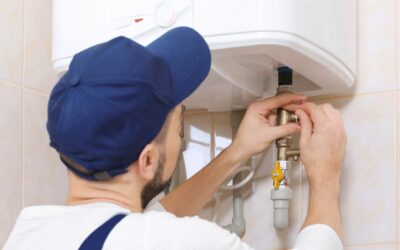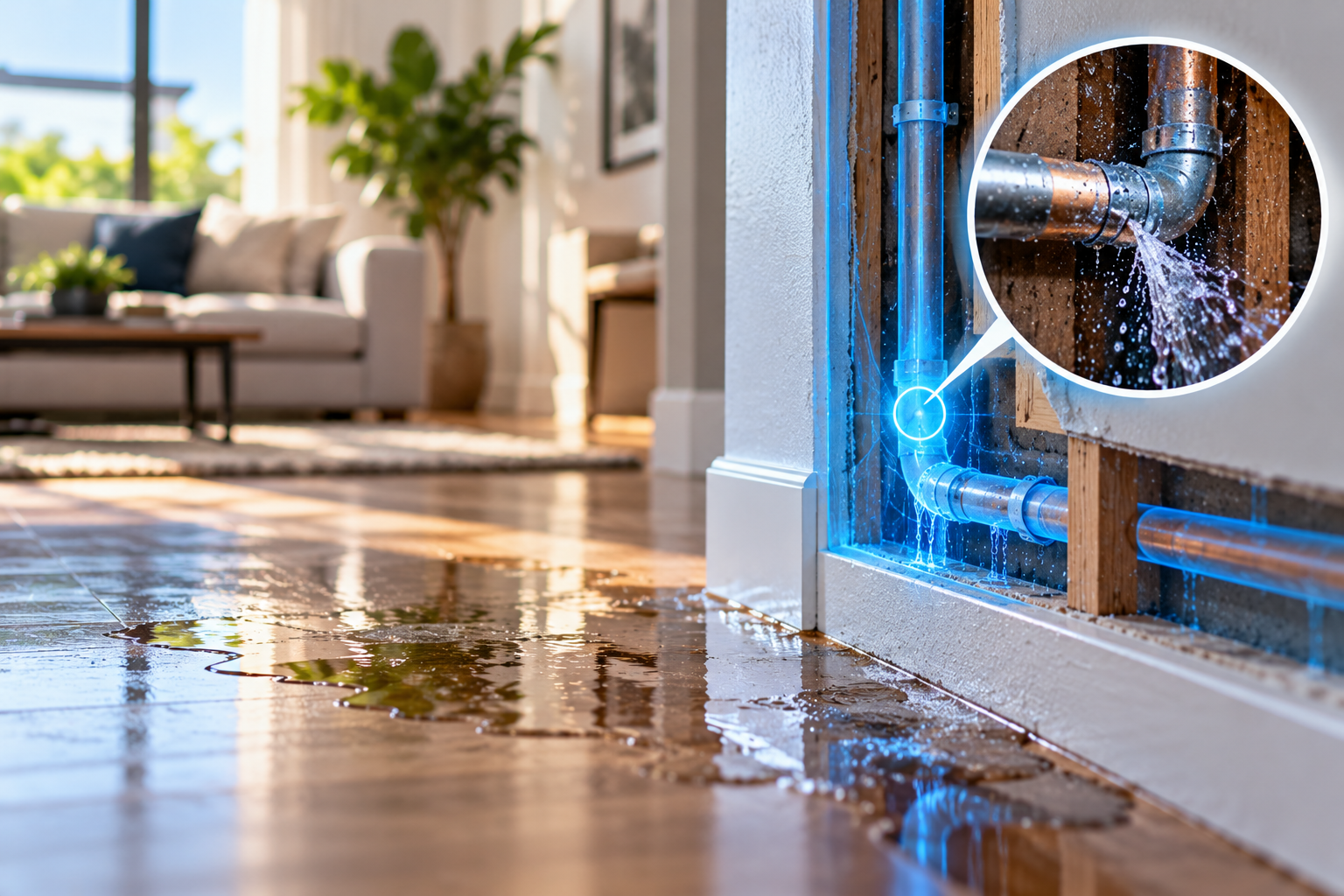
A leaking tap or burst pipe is usually easy to notice, but not every plumbing leak leaves an obvious puddle. Water can escape from pipes inside walls, underneath floors, above ceilings or below ground for some time before the source becomes visible. Water leak detection helps identify these hidden problems so the correct area can be investigated and repaired.
For homeowners, some of the first warning signs can be an unexplained increase in water consumption, damp patches, peeling paint, mould, sounds of running water or a water meter that continues moving when no water should be in use.
Finding a leak early is important because continued water loss can affect both the property and the monthly water bill. The City of Johannesburg recommends that customers regularly monitor water consumption and check properties for leaks, noting that a sudden increase in consumption may indicate a leak or another issue requiring investigation.
This guide explains how to detect a water leak, how to use your water meter as a simple first test, where hidden leaks commonly occur and when professional leak detection may be necessary.
What Is Water Leak Detection?
Water leak detection is the process of establishing whether water is escaping from a plumbing system and locating the likely source of the leak. The process can be relatively straightforward when water is visibly dripping from a tap or pipe, but concealed leaks can require a more systematic investigation.
Hidden leaks may occur behind walls, underneath floors, inside ceilings, below paving or along underground water-supply pipes. Because the escaping water can travel away from the actual pipe failure before becoming visible, the damp patch you see is not necessarily directly beside the source.
Professional leak detection is particularly useful when there are signs of water loss but the location cannot be identified without opening finished surfaces unnecessarily.
For plumbing repairs, maintenance and leak investigations in Johannesburg and surrounding areas, Savvy Plumbing provides professional plumbing services for residential and commercial properties.
What Are the Signs of a Hidden Water Leak?
A hidden leak does not always produce an immediate or obvious sign. In some cases, the first indication is an unusual water bill or meter reading rather than visible water.
Possible warning signs include:
- Unexpectedly high water consumption: Usage increases even though household routines have not changed significantly.
- A water meter that keeps moving: The meter records consumption when taps, toilets and water-using appliances are not being used.
- Damp walls or ceilings: Moisture, staining or discolouration appears without an obvious source.
- Peeling or bubbling paint: Moisture behind painted surfaces can cause finishes to lift or deteriorate.
- Mould or persistent musty smells: Continually damp areas can create conditions where mould develops.
- Sounds of running water: Water can sometimes be heard moving when all visible fixtures are closed.
- Unexplained wet areas outside: Permanently damp soil, unusually green patches or water appearing through paving can indicate an underground leak.
- Reduced water pressure: A significant pipe leak can sometimes affect the water pressure available at fixtures.
One warning sign alone does not necessarily confirm a plumbing leak. Damp, for example, can also be caused by waterproofing, rainwater or drainage problems. A combination of symptoms and water-meter testing can provide a clearer indication.
How to Check for a Water Leak Using Your Water Meter
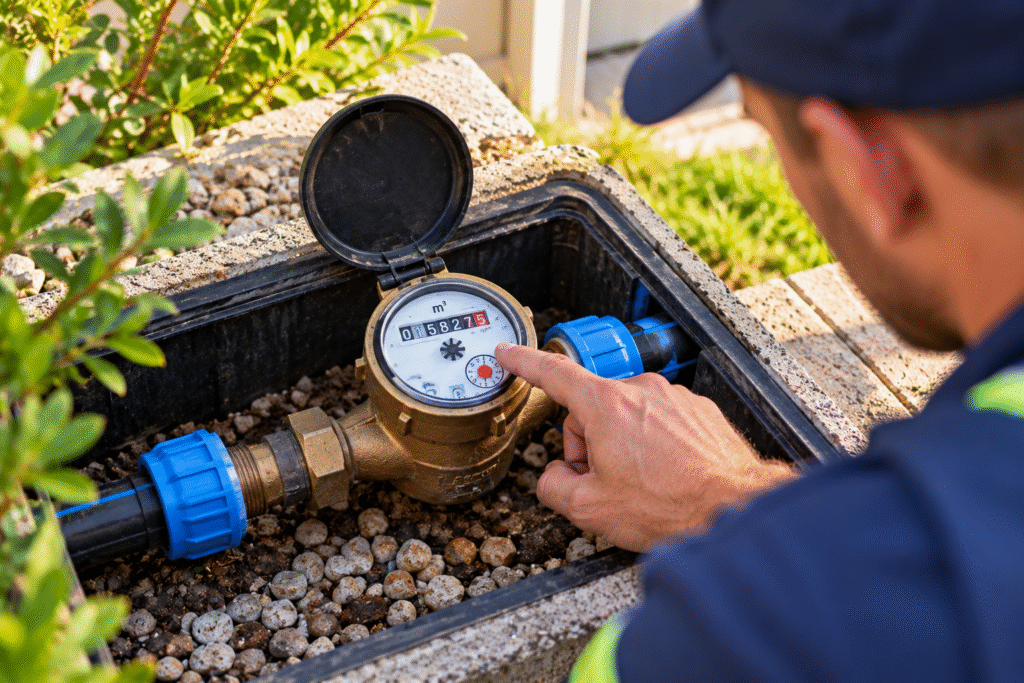
Your water meter can provide a useful first indication of whether water is being lost somewhere on the property.
The South African Department of Water and Sanitation recommends shutting off water use, recording the meter reading, waiting and checking the meter again as a simple way to identify possible water loss.
A practical check can be completed as follows:
- Make sure nobody will use water during the test.
- Close all taps and make sure water-using appliances are not running.
- Do not flush toilets during the test period.
- Record the water-meter reading or take a clear photograph.
- Wait approximately 15 minutes without using any water.
- Check the meter again and compare the reading.
If the reading has increased while no water was intentionally being used, water may be escaping somewhere on the property. The next step is to identify whether the loss is coming from an obvious fixture such as a toilet or tap, or whether further leak detection is required.
The City of Johannesburg similarly advises residents to turn off taps, appliances and other water outlets and check whether the meter continues registering consumption. The City also recommends keeping photographs of meter readings and dates when investigating unusual consumption.
Common Places Where Hidden Water Leaks Occur
Water can escape from many different parts of a residential plumbing system. Understanding the possible locations can help narrow down the investigation.
| Possible Leak Location | Signs You May Notice | Typical Next Step |
|---|---|---|
| Toilet or cistern | Water continually entering the bowl, filling sounds or unexplained meter movement | Check the cistern, inlet valve, seals and internal components |
| Tap or mixer | Visible dripping or moisture around the fitting | Inspect the tap, cartridge, washer and connections |
| Pipe inside a wall | Damp patches, staining, peeling paint or moisture | Investigate the pipe route and locate the leak before opening the wall |
| Pipe beneath a floor | Damp flooring, unexplained water loss or moisture appearing at edges | Professional leak detection may help narrow down the source |
| Ceiling or roof-space plumbing | Ceiling stains, dripping or damaged ceiling boards | Inspect accessible pipework and geyser-related connections |
| Underground supply pipe | Meter movement, damp soil, pooling water or unexplained high consumption | Locate the affected section before excavation where possible |
| Geyser and connections | Dripping, water around the installation or ceiling moisture | Have the geyser and associated valves and pipework assessed |
How to Check Whether Your Toilet Is Leaking
Toilets are worth checking when a water meter indicates unexplained consumption because a cistern can leak quietly into the toilet bowl without leaving water on the floor.
Listen carefully for water continually trickling into the bowl or for the cistern refilling when the toilet has not recently been flushed. The Department of Water and Sanitation also suggests using food colouring in the cistern as a test: if colour subsequently appears in the bowl without flushing, water is passing from the cistern into the bowl.
A leaking toilet should not be ignored simply because the water disappears down the drain. Continuous leakage can add substantially to total water consumption over time.
How Are Leaks Behind Walls Detected?
A leak behind a wall can be difficult to locate because the point where moisture becomes visible may not be the point where the pipe has failed. Water can follow pipes, joints, cavities and building materials before appearing elsewhere.
The investigation normally starts by considering the plumbing layout, the affected area and whether the water meter indicates continuous water loss. Accessible fittings and nearby fixtures can then be checked before finished surfaces are opened.
Where the source remains unclear, professional leak detection techniques can be used to narrow down the likely location. The appropriate method depends on the type of pipework, its location and the nature of the suspected leak.
This targeted approach is preferable to randomly breaking tiles, walls or flooring in the hope of finding a damaged pipe.
How Are Underground Water Leaks Detected?
Underground leaks can occur on water-supply pipes running between the municipal connection and the property or between different parts of a site. Because the pipe is buried, the water may disappear into surrounding soil rather than immediately reaching the surface.
Possible signs include unexplained meter movement, persistently wet soil, pooling water, unusually vigorous vegetation in one area or a noticeable increase in water consumption.
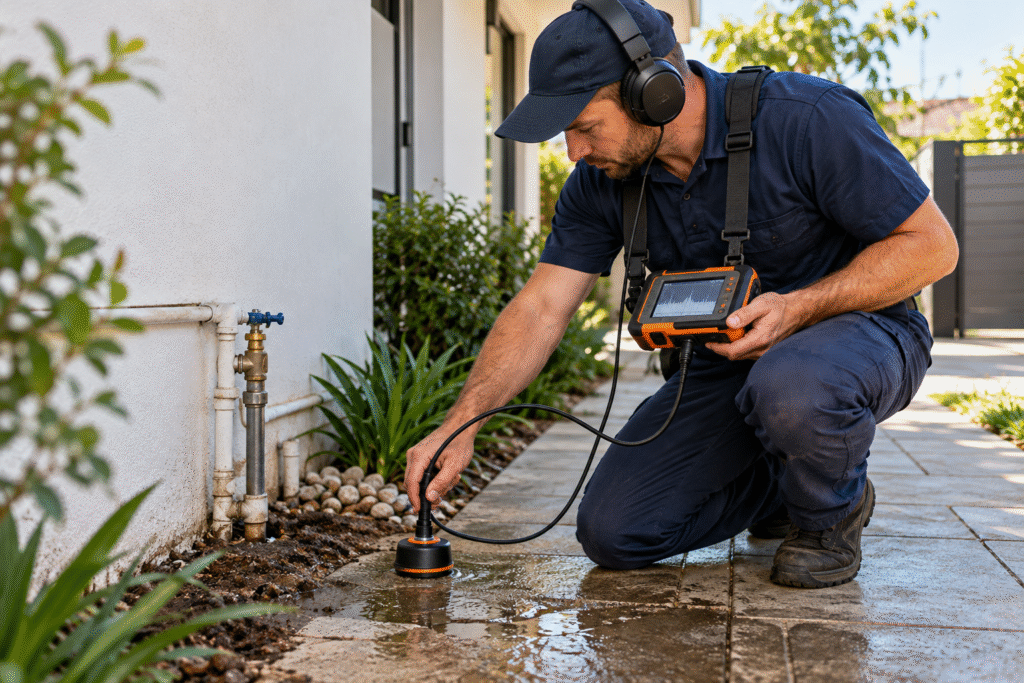
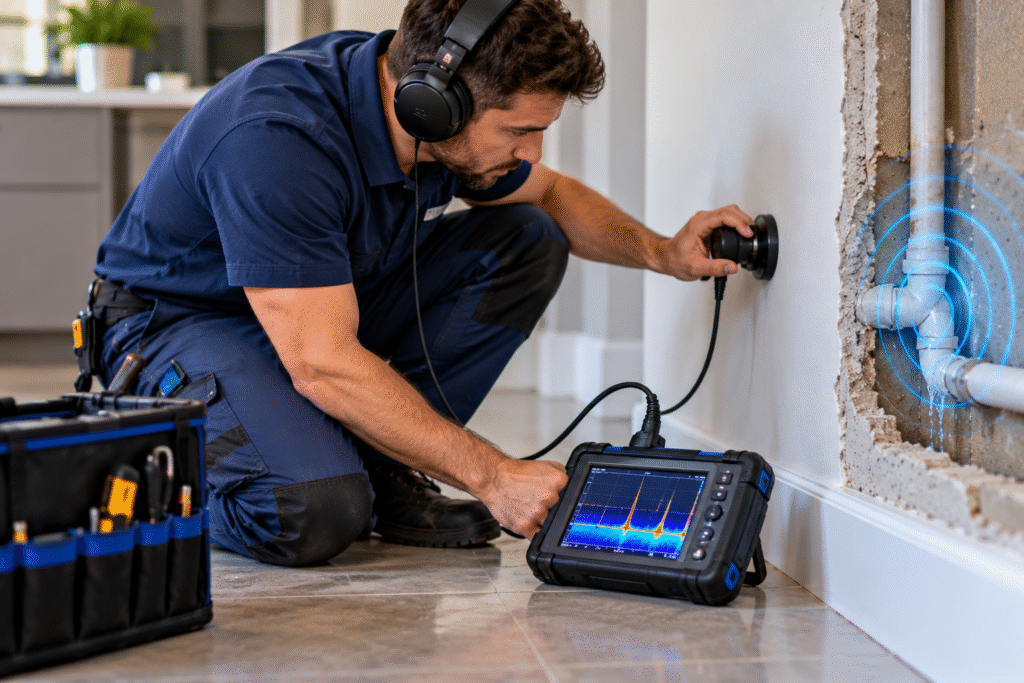
Professional investigations can use specialised equipment and systematic testing to help establish the likely position of an underground leak before excavation. Leak-detection equipment used for underground water loss can include acoustic methods designed to identify sounds associated with escaping water.
Accurately narrowing down the affected area can reduce unnecessary excavation of paving, driveways, gardens or other finished surfaces.
Professional Water Leak Detection Methods
There is no single leak detection method that is suitable for every property or every type of pipe. A plumber may use several checks to progressively narrow down the problem.
Depending on the situation, the investigation can involve visual inspection, water-meter testing, isolation of sections of the plumbing system, pressure-related checks and specialised leak detection equipment.
Acoustic equipment can be useful in suitable situations because escaping pressurised water can create sound and vibration. Other diagnostic methods may be considered depending on the pipe material, accessibility and suspected location.
The purpose is not simply to confirm that water is being lost. Effective leak detection should help narrow down the source sufficiently for the repair itself to be planned with as little unnecessary disruption as practical.
Water Leak Detection vs Leak Repair
Leak detection and leak repair are related but separate parts of solving a plumbing problem.
Leak detection focuses on identifying whether a leak exists and locating its likely source. Leak repair involves accessing the failed component and repairing or replacing the affected pipe, fitting, valve or fixture.
Locating a leak does not automatically determine the extent of the repair. Once the damaged area is accessible, the plumber may discover that a fitting needs replacing, a section of pipe has failed or a wider part of ageing pipework requires attention.
Savvy Plumbing’s guide to common plumbing work and repairs provides additional information about leaking pipes, blocked drains, installations and other typical plumbing jobs.
What Should You Do If You Suspect a Water Leak?
The appropriate response depends on how serious the leak appears to be. A small suspected concealed leak requires investigation, while a burst pipe or rapidly escaping water may require immediate action to limit damage.
If you suspect a leak:
- Look for obvious sources such as dripping taps, toilets, appliance connections and visible pipes.
- Check the water meter with all water use stopped.
- Record unusual water consumption and photograph the meter reading if appropriate.
- Check walls, ceilings, cupboards and outdoor areas for signs of moisture.
- Avoid unnecessarily opening walls or floors when the source has not been established.
- Arrange professional leak detection when water loss is indicated but the source remains unclear.
For a major uncontrolled leak, shutting off the relevant water supply where it can be done safely may help limit further water damage while plumbing assistance is arranged.
Savvy Plumbing offers emergency plumbing services for urgent plumbing problems in Johannesburg and surrounding areas.
Who Is Responsible for a Water Leak?
It is useful to establish whether the suspected leak is within the property or on municipal infrastructure. The City of Johannesburg advises that leaks on municipal meters or infrastructure outside the property boundary should be reported to the City, while internal leaks within the property boundary are generally the property owner’s responsibility.
If you are uncertain where the water loss originates, checking the meter and inspecting the property can provide useful information before the problem is escalated to the appropriate party.
Can a Hidden Water Leak Increase Your Water Bill?
Yes. A hidden leak can continually consume water even when nobody is actively using a tap, shower or appliance. Depending on the rate of water loss and how long the problem continues, this can contribute to an unexpectedly high municipal water bill.
An unusual bill does not prove that a leak exists, because consumption patterns and meter-reading issues can also affect an account. However, an unexplained increase is a good reason to compare current and previous meter readings and perform a basic leak test.
Regularly recording meter readings can also make unusual changes easier to identify rather than waiting for visible water damage to appear.
Why Early Water Leak Detection Matters
The longer a concealed leak continues, the more water can be lost and the greater the possibility of damage to surrounding building materials.
Persistent moisture can affect paint, plaster, ceilings, flooring, cupboards and other finishes. Underground leaks can also waste substantial amounts of water without creating an obvious indoor warning sign.
Early investigation can therefore help reduce unnecessary water loss and allow repairs to be planned before the effects of the leak become more extensive.
When Should You Call a Plumber for Leak Detection?
Some visible plumbing leaks have an obvious source, but professional assistance becomes particularly useful when the water meter indicates consumption and you cannot identify where the water is going.
You should consider arranging a plumbing assessment when there is persistent unexplained meter movement, recurring damp, water appearing through walls or floors, suspected underground leakage, significant water loss or a leak in an area that would require finished surfaces to be opened.
Professional investigation can also be valuable before extensive demolition. Narrowing down the likely source first can help avoid unnecessarily opening multiple sections of a wall, floor or paved area.
Savvy Plumbing and Construction provides plumbing services throughout Johannesburg and surrounding Gauteng areas, including leak detection, emergency repairs, plumbing maintenance and pipe repairs.
Visit the Savvy Plumbing contact page to discuss a suspected water leak or request a quotation.
Frequently Asked Questions About Water Leak Detection
How do I know if I have a hidden water leak?
Possible signs include unexplained water consumption, a meter that continues moving when no water is being used, damp walls or ceilings, peeling paint, persistent moisture, running-water sounds and unexplained wet areas outside. A water-meter test can help establish whether water is being consumed somewhere on the property.
How can I check for a water leak at home?
Turn off taps and water-using appliances, avoid flushing toilets and record the water-meter reading. Wait approximately 15 minutes without using water and check the meter again. If the reading has increased, further investigation may be required to identify the source.
Can a toilet leak without water appearing on the floor?
Yes. Water can leak internally from the toilet cistern into the bowl and then flow directly into the drainage system. This means the toilet can waste water without creating a puddle around the fixture.
How do plumbers find hidden water leaks?
The investigation can involve checking the water meter, inspecting accessible plumbing, isolating sections of the system and using appropriate diagnostic or leak detection equipment. The method depends on the location, pipe material and type of suspected leak.
Can a water leak be underground?
Yes. Underground supply pipes can leak beneath gardens, paving and other outdoor areas. Warning signs can include unexplained meter movement, persistently wet soil, pooling water or increased water consumption.
Does a high water bill mean I have a leak?
Not necessarily. Higher consumption can have several causes, but an unexplained increase is a reason to check your water meter and plumbing for possible leaks. Comparing meter readings with previous periods can help identify unusual usage.
Should I break open a wall if I think a pipe is leaking?
Not before the likely source has been narrowed down where possible. Water can travel away from a damaged pipe before becoming visible, so opening the wall directly beside a damp patch may not reveal the leak. Professional leak detection can help identify the area that requires investigation.
When should I call a plumber for water leak detection?
Call a plumber when the meter indicates unexplained water loss, the source of damp or leaking water cannot be found, an underground leak is suspected, or water is escaping rapidly enough to risk property damage. Concealed leaks are particularly worth investigating before walls, floors or paving are unnecessarily opened.