
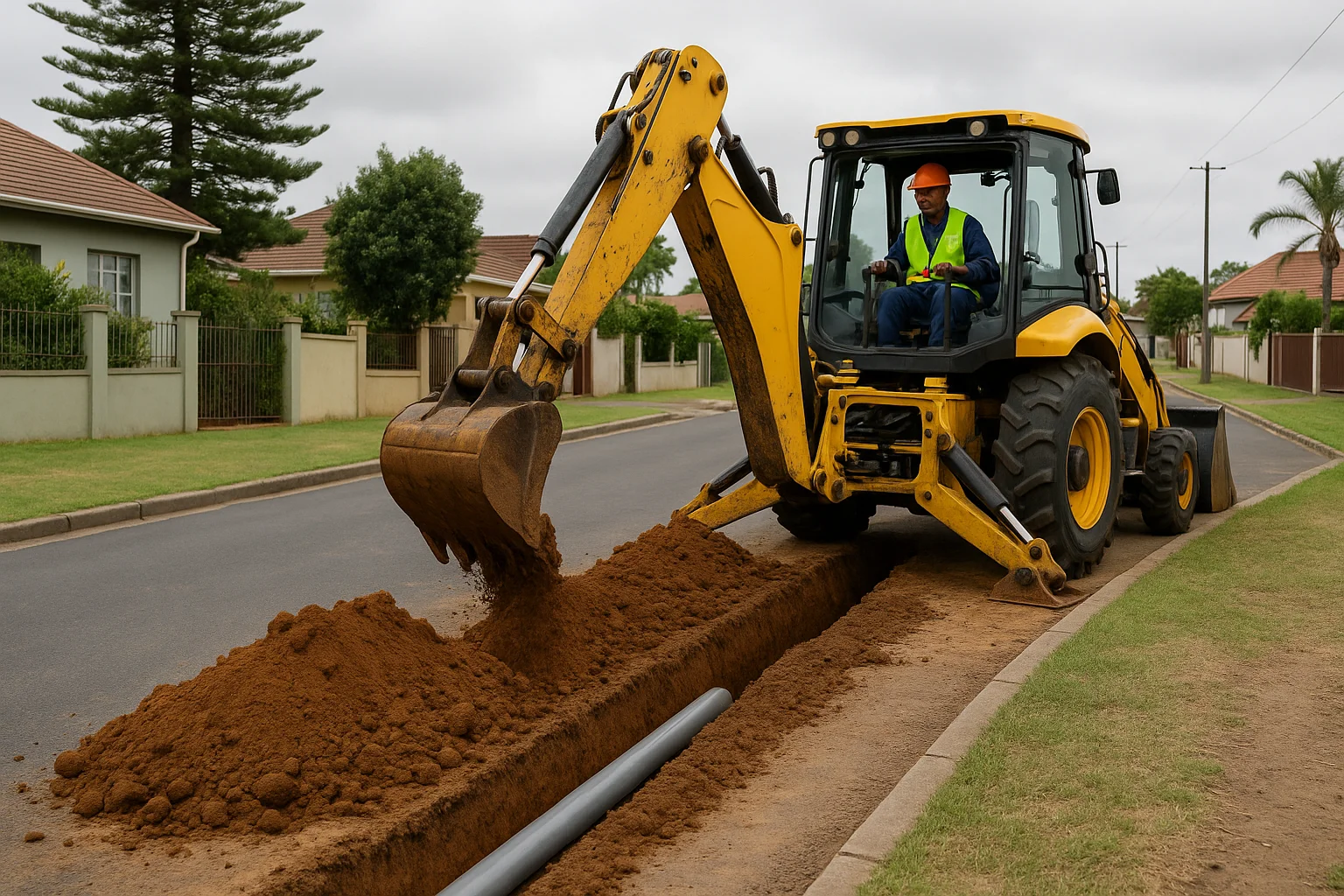
tlb hire is the quickest way to get controlled excavation and trenching for plumbing, drainage and civil works across South Africa, whether you’re restoring a blocked drain, replacing a burst geyser or digging for septic tank services. Our guide explains what to expect from TLB hire, safety and planning tips, and how this service links to plumbing services, emergency plumbing and larger construction plumbing projects.
What is tlb hire and when should I use a TLB for plumbing jobs?
TLB hire means contracting a tractor-loader-backhoe (TLB) and operator to perform small-to-medium excavation tasks. In the plumbing and drainage industry, a TLB is typically used for trenching for new mains, digging to expose burst and leaking pipes, installing septic tanks and grease traps, and creating access for bathroom renovations or commercial plumbing lines. The machine’s combination of a front loader and rear backhoe makes it ideal for tight residential sites and street-side repairs in urban areas.
Using a TLB is often faster and more cost-effective than manual labour for jobs requiring volumes of soil to be moved precisely. It also reduces downtime for businesses — vital for restaurants needing grease trap maintenance or commercial clients handling water heater installation and leak detection.
How does tlb hire support emergency plumbing and 24/7 responses?
A TLB can be mobilised quickly to support 24/7 emergency plumber responses in South Africa, particularly when a burst geyser repair and replacement or major drain collapse requires immediate excavation. Emergency plumbing teams rely on a TLB to open access to damaged mains, stabilise trenches, and accelerate repairs to minimise water damage and business disruption.
For emergency call-outs, reputable TLB hire providers will offer:
- Rapid mobilization within hours
- Operators experienced with emergency plumbing site conditions
- Light traffic management and safety setup for public roads
According to industry response protocols, coordinated work between licensed plumbers and certified TLB operators reduces repair time and lowers the chance of secondary damage.
How much does tlb hire cost in South Africa and what affects price?
Costs vary by region, job complexity and whether you opt for an operator-inclusive rate. Typical cost drivers include travel distance, site access, ground conditions and the duration of hire. Projects that require precision trenching for water mains or sewer lines can be priced differently from bulk earthworks for civil plumbing projects.
Example pricing table (indicative):
| Service | Typical Duration | Indicative Cost Factors |
|---|---|---|
| Trenching for pipework | Half day–2 days | Depth, soil type, access |
| Septic tank excavation | 1–3 days | Volume, rock removal, compaction |
| Emergency excavation (burst pipe) | Hours–1 day | Rapid mobilization, nightworks |
Ask suppliers for a detailed quote that lists machine hours, operator time, fuel, transport and any traffic or safety costs. Many providers also offer finance options for larger projects; see tailored support for renovations and project funding on our finance page.
What site preparation is required before TLB arrival?
Good site preparation speeds up the job and keeps costs down. Before TLB hire, you should:
- Clear the work area of cars, loose materials and obstructions
- Mark the exact trench line and any existing utilities
- Arrange permits or wayleave access with local authorities if working on municipal roads
Operators will still need to perform underground service checks and may require a plumber on-site for immediate pipework. For projects involving gas lines or gas leak detection, ensure a qualified gas technician is present. For more on compliant site practices, review accredited health and safety standards in civil and construction plumbing.
How do TLBs reduce risks during leak detection and burst geyser repair?
For leak detection and burst geyser repair and replacement, a TLB can quickly expose the damaged section so certified plumbers can perform repairs rather than relying on extended probing. This reduces unnecessary excavation extent and limits exposure to contaminated soils. TLBs equipped with narrow buckets permit accurate trenching close to foundations and adjacent service runs, which is important for multi-service corridors in commercial plumbing.
According to the Water Research Commission, timely and accurate excavation for leak repairs is key to preventing groundwater contamination and water loss in vulnerable areas.
Can a TLB be used for septic tank services and french drain cleaning?
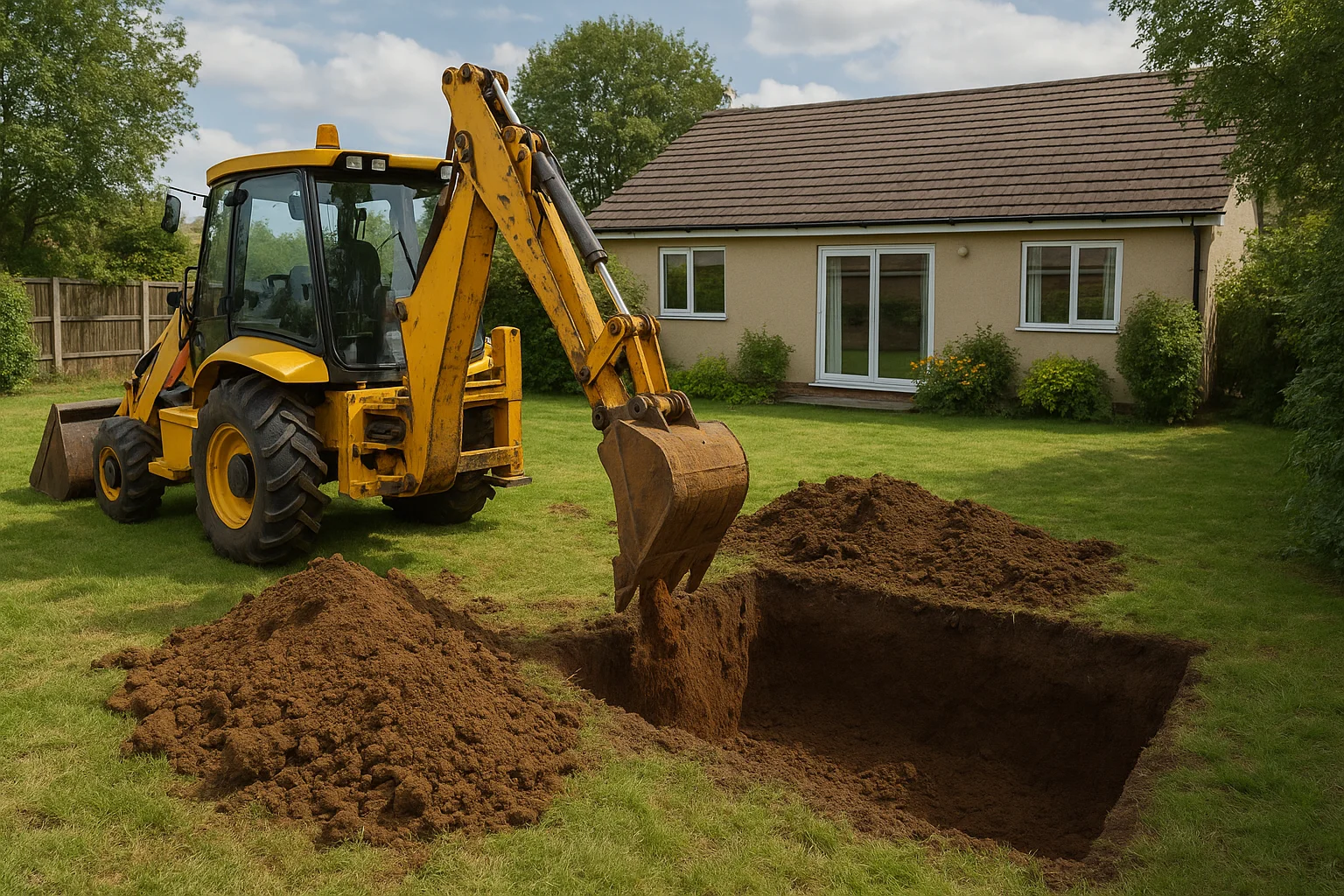
Yes. TLB hire is commonly used for installing, replacing or removing septic tanks, and for digging french drains during yard drainage upgrades. The backhoe provides the depth and accuracy required to form tank pits and inlet/outlet channels, while the loader moves spoil and backfill materials efficiently. When linked with septic tank cleaning services, a coordinated approach reduces site disruption and ensures proper hydraulic gradients for drainage.
Septic work often requires permits and a licensed septic contractor to handle effluent disposal, so confirm regulatory requirements in your province before scheduling excavation.
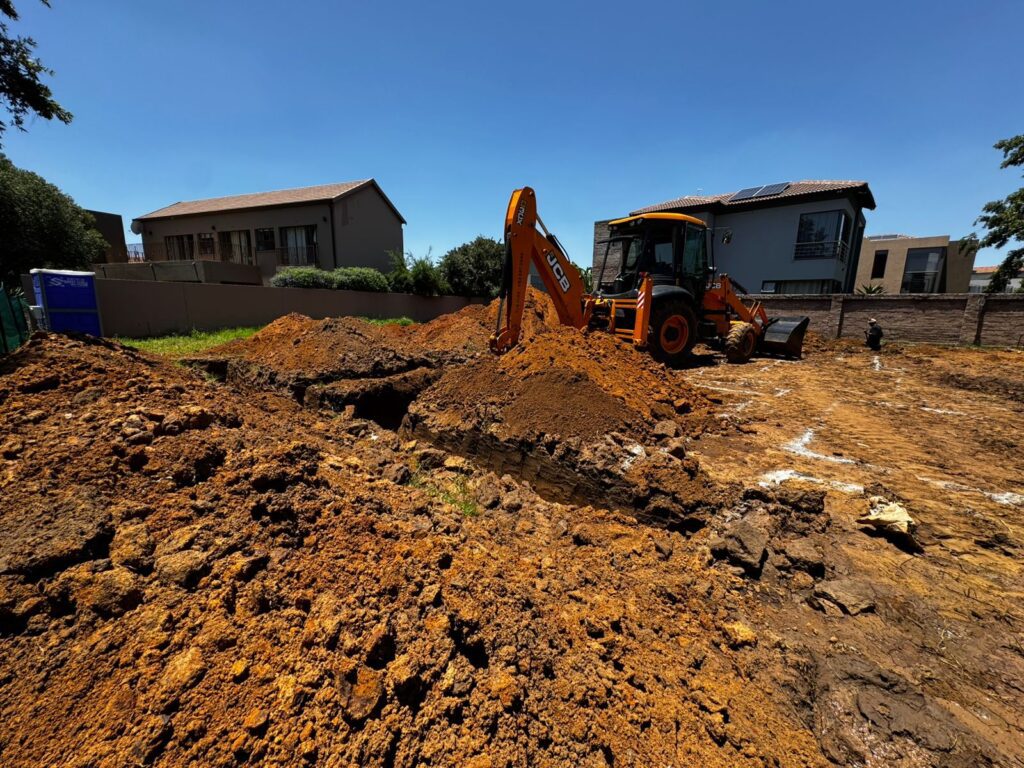
What safety measures and certifications should I expect from tlb hire contractors?
Always choose TLB hire suppliers that follow health and safety regulations for construction works. Expect operators to have:
- Proof of training and machine certification
- Site-specific risk assessments and method statements
- Traffic management and protective equipment on public roads
For larger commercial or civil plumbing projects, contractors should follow a formal health and safety plan, including confined space procedures for deep trenches and coordination with on-site plumbers for live utilities. Our Savvy Health and Safety resource highlights compliance expectations and is a good internal reference for clients managing larger project teams.
How does tlb hire fit into bathroom renovations and residential plumbing projects?
In bathroom renovations, a TLB is useful when plumbing lines must be realigned or when new sewer or stormwater connections require a trench beyond what hand tools can handle without causing damage. For residential clients, precise trenching reduces the need to remove excess landscaping and speeds up the plumbing installation, tiling and flooring finishes that follow.
Coordination between your plumber, tiler and TLB operator reduces rework: the operator excavates to the correct invert levels, the plumber completes pipe installation and pressure testing, then the team backfills and reinstates finishes. For integrated plumbing installations, follow a sequenced workplan to protect bathroom installations and vinyl flooring during site works.
What environmental and planning considerations apply to excavation and TLB use?
Excavation can impact stormwater flow, vegetation and subsurface ecosystems. Plan drainage diversions for the duration of works, protect tree roots where possible, and responsibly dispose of spoil. In sensitive or high groundwater areas, using smaller, tracked TLBs that minimise compaction may be required. For restaurants or food service premises performing grease trap repairs, follow containment protocols to prevent effluent run-off.
According to Statistics South Africa, construction activities require coordinated planning between contractors and local authorities to limit environmental impact and maintain business continuity in urban centres.
How do I choose the right TLB size and bucket for my project?
Choosing the right machine depends on trench depth, space constraints and the type of soil. Common bucket sizes for TLBs include narrow trenching buckets (300–600 mm) for pipework and wider general-purpose buckets for spoil handling. Where rock or hardpan is encountered, a TLB with a rock-breaking attachment or a stronger digging bucket may be necessary.
Key selection tips:
- Narrow bucket for precise pipe trenches
- Larger bucket for bulk excavation and backfill
- Rubber tracks or tyres chosen based on access surface
Working with experienced construction plumbing or civils contractors ensures the chosen configuration matches project requirements; internal construction civils pages outline scope and typical equipment match-ups.
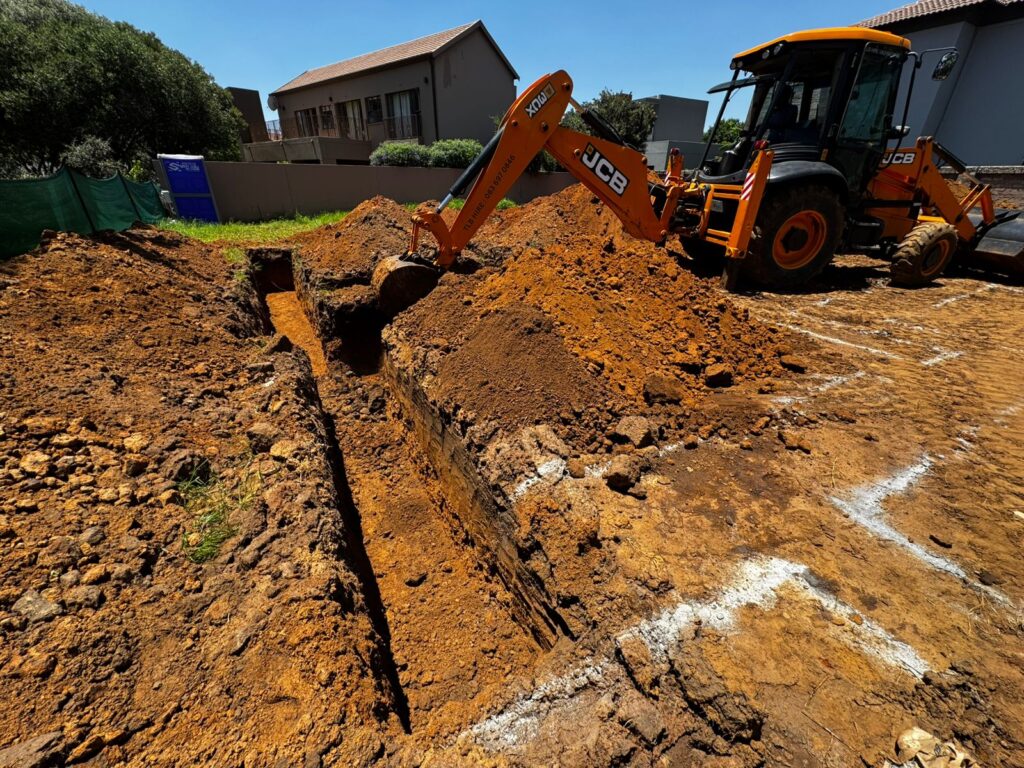
What else should plumbing businesses know about integrating TLB hire into their services?
Plumbing businesses that offer full-service plumbing and civil services will find TLB hire a competitive advantage, enabling them to bid for larger commercial plumbing contracts and industrial plumbing jobs. Integrating TLB-capable teams improves scheduling for blocked drains, burst-geyser repairs, borehole drilling support or water heater installation projects.
Benefits for plumbing businesses:
- Faster turnaround on emergency jobs
- Reduced subcontract coordination for excavation
- Better control of quality and warranty outcomes
According to industry best practice, offering combined excavation and plumbing services increases customer retention and simplifies maintenance contracts for property managers.
How do I book tlb hire and what questions should I ask the provider?
When booking, ask for the following details to ensure the hire meets your plumbing project needs:
- Is an operator included and are they certified?
- What are hourly and mobilization rates?
- Does the provider handle traffic management and permits?
- Are insurance and public liability covered?
- Can they work with late-night emergency plumbing calls?
Provide your site plan and intended pipe profiles to the supplier in advance. For plumbing maintenance or recurring works, consider multi-day hires to reduce per-hour costs. For support on complex plumbing installations we often coordinate with specialists in blocked drain response and burst geyser repairs to ensure the excavation matches the repair strategy; see our blocked drains solutions for Gauteng clients and burst geyser repair guidance for more detail.
Where can I find more specialist services related to TLB-assisted plumbing work?
A number of specialist services typically tie into TLB-assisted jobs: leak detection teams to pinpoint issues before excavation, gas installations and gas leak detection for projects near gas mains, and solar geysers or water borehole drilling when shifting water source strategies. Work with vendors who can integrate these services so your excavation feeds directly into final plumbing installations.
For financing larger renovation-driven excavations, clients can explore finance options to spread costs; our finance-your-renovations page outlines common approaches. For full-service plumbing installations linked to civil work, refer to professional installation guides and safety standards to ensure a compliant outcome.
Summary: Is tlb hire right for my plumbing or drainage project in South Africa?
TLB hire is an essential service for residential and commercial plumbing projects across South Africa — from emergency plumbing and burst geyser repair and replacement to septic tank services, grease trap repairs and trenching for water mains. When properly planned, a TLB reduces repair time, minimises collateral damage to landscaping and cutbacks on labour costs. Choose certified operators, confirm insurance and safety compliance, and coordinate with plumbers and specialised services like leak detection or gas technicians to get a fast, cost-effective result.
For practical next steps: evaluate the trench depth and access constraints, collect site utility drawings, and request a detailed operator-inclusive quote. For recurring maintenance contracts or construction civils needs, integrating TLB hire into your service offering can deliver measurable savings and faster turnaround for clients across residential, commercial and industrial sectors.
External reference: Backhoe loader – Wikipedia
Internal resources you may find useful: plumbing maintenance services, blocked drains Gauteng, burst geyser repairs, construction civils, finance your renovations.
